
Last updated October 30, 2026
 Home additions & ADU
 Kitchen remodeling
 Bathroom remodeling
 Roofing
 Windows & doors
 Driveway & pavers
 Fence
Free written scope consultation - allowances, timeline, and change-order rules on paper before a single trade is scheduled
Construction Warning Signs: A Lake Forest Homeowner’s Reference Guide
A single diagonal crack above a door frame is cosmetic. The same crack reappearing six months after patching, in the same location, is your foundation telling you something the drywall is just translating. Lake Forest was built fast between the late 1960s and early 1990s, and much of that housing stock now sits at the age where systemic issues start announcing themselves quietly. This guide covers the warning signs that matter in Lake Forest specifically: settlement patterns from fill-graded lots, stucco water intrusion on south-facing walls, flat roof deterioration on 1980s tracts, and the electrical and HVAC discoveries that surface mid-remodel. You’ll learn how to read your house, how to document what you find, and when a warning sign is actually a negotiation point with your insurance company.
Styles & brands we work with
Quick Answer
The construction warning signs Lake Forest homeowners most often miss are patterned cracks that return after patching, stucco staining at window frame corners, moisture marks on garage wall interiors, and flat roof ponding that lasts more than 48 hours after rain. These indicate systemic issues rather than isolated repairs. Any warning sign that reappears in the same location, worsens seasonally, or pairs with multiple symptoms across different trades usually means the underlying cause needs a general contractor’s or engineer’s assessment rather than another patch job. For a systematic approach to spotting these issues early, see our General Contractor Maintenance Checklist for Lake Forest Homeowners.
Table of Contents
- Settlement Cracking vs. Structural Movement: What Lake Forest Soil Actually Does
- Roofing Warning Signs on Flat, Low-Slope, and Tile Profiles
- Stucco Water Intrusion: What’s Invisible From the Street
- Electrical and HVAC Warning Signs That Emerge Mid-Remodel
- How to Document Warning Signs for Insurance, Resale, and Warranty Claims
- Lake Forest Neighborhood Patterns: What We See in Specific Tracts
- Common Mistakes to Avoid
- When to Call a Professional
- Frequently Asked Questions
- The Bottom Line
Settlement Cracking vs. Structural Movement: What Lake Forest Soil Actually Does
Lake Forest sits on a mix of engineered fill and expansive clay soils. The city’s hillside tracts, especially those cut into slopes in the 1970s and 1980s, were built on compacted fill that continues to settle decades later. That’s not a construction defect. It’s geology. The question is whether a crack reflects normal settlement or active structural movement.
Normal settlement cracks tend to be hairline, vertical, and stable. They appear at drywall seams, above door frames, or at the junction where a wall meets a ceiling. They don’t grow beyond an eighth of an inch, and they don’t return after patching. In Lake Forest’s tract neighborhoods, we see these constantly. They’re harmless, and most homeowners can patch them without a second thought.
Structural movement looks different. Here’s the pattern we’ve learned to recognize after years of walking Lake Forest properties:
- Diagonal cracks that originate at window or door corners and extend upward at a 30 to 45 degree angle. These mean the opening is carrying load it wasn’t designed to carry.
- Stairstep cracks in block walls or stucco that follow mortar joints rather than cutting through blocks. This is differential settlement at work.
- Cracks wider at the top than the bottom, which typically indicates one side of the foundation is moving faster than the other.
- Doors that stick seasonally but operate fine other months, paired with visible cracking. Expansive clay swells in wet winters and shrinks in dry summers. If your front door sticks every February, that’s your soil breathing.
- Cracks that reappear in the same location within 12 months of professional patching. This is the most important signal we see in Lake Forest, and it’s the one homeowners most often dismiss as “bad patch work.” It isn’t. The patch failed because the movement is ongoing.
What should you do if you see structural movement patterns? First, measure the crack. Use a piece of painters tape, mark the ends with a pen, and write the date on it. If the crack extends past your marks within 90 days, document it with photos and call a foundation specialist. If the crack holds steady for a full wet-dry cycle, it’s likely historical settlement that has found equilibrium. Lake Forest’s drought years followed by heavy rain cycles accelerate this test.
One thing we tell every Lake Forest homeowner: don’t let a handyman talk you into injecting epoxy or caulking a structural crack without understanding what’s causing it. You’ll spend money hiding the symptom while the foundation keeps moving beneath you. A general contractor who manages full-scope work will bring in the right engineer, not guess at a fix. That’s the difference between a $400 patch and a $4,000 correct repair, and the difference matters. Our General Contractor Troubleshooting: Common Problems and How to Fix Them explains how experienced contractors diagnose root causes instead of chasing symptoms.
Roofing Warning Signs on Flat, Low-Slope, and Tile Profiles
Lake Forest has two distinct roofing generations. The 1970s and early 1980s tracts, particularly in the areas around El Toro Road and Trabuco Road, used flat and low-slope built-up roofing with gravel surfacing. The late 1980s and 1990s tracts shifted to concrete tile on steeper pitches. Each fails differently, and each sends different warning signs.
Flat and low-slope roofs fail through ponding, blistering, and membrane separation. After rain, walk your roofline visually from the street or a neighbor’s yard. If water pools in the same spot for more than 48 hours after the rain stops, that’s a warning sign. The membrane is sagging, the substrate beneath it is compressing, and that standing water is working its way into seams. We’ve seen Lake Forest flat roofs where ponding went unaddressed for two winters. The repair cost tripled because the sheathing underneath had rotted by the time anyone noticed ceiling stains inside.
On flat roofs, also look for:
- Blisters or bubbles visible from a ladder or drone inspection. These mean moisture has gotten between membrane layers.
- Gravel displacement that exposes bare asphalt. UV breaks down unprotected membrane within two to three Southern California summers.
- Penetration seals around vents, skylights, and HVAC curbs that show cracking or pulling away from the metal.
Concrete tile roofs fail through broken tiles, underlayment deterioration, and valley flashing failure. Walk your property after a Santa Ana wind event. Broken or slipped tiles on the ground are obvious. What’s less obvious is what’s happening underneath: the original underlayment on Lake Forest tile roofs is now 30 to 40 years old, and it degrades even when the tile above it looks fine. We’ve opened roofs where the tile was in pristine condition and the underlayment beneath had the texture of dry newspaper.
Look for:
- Dark staining on the underside of eaves or in attic spaces, particularly at valleys and around penetrations.
- Granules collecting in gutters in measurable amounts. Tile roofs don’t shed granules, but the underlayment’s top layer breaks down and washes out through the eaves.
- Ridge lines that look wavy rather than straight, which indicates the ridge beam is sagging or the tiles have shifted.
Roofing replacement in Lake Forest is a project where material selection matters. We carry both GAF and Owens Corning lines because different roof profiles perform differently, and the right membrane or tile underlayment depends on your roof’s pitch, exposure, and age. A roofline-to-backyard general contractor can assess whether your roof needs a patch, a re-paper, or a full replacement without selling you the most expensive option by default.
Stucco Water Intrusion: What’s Invisible From the Street
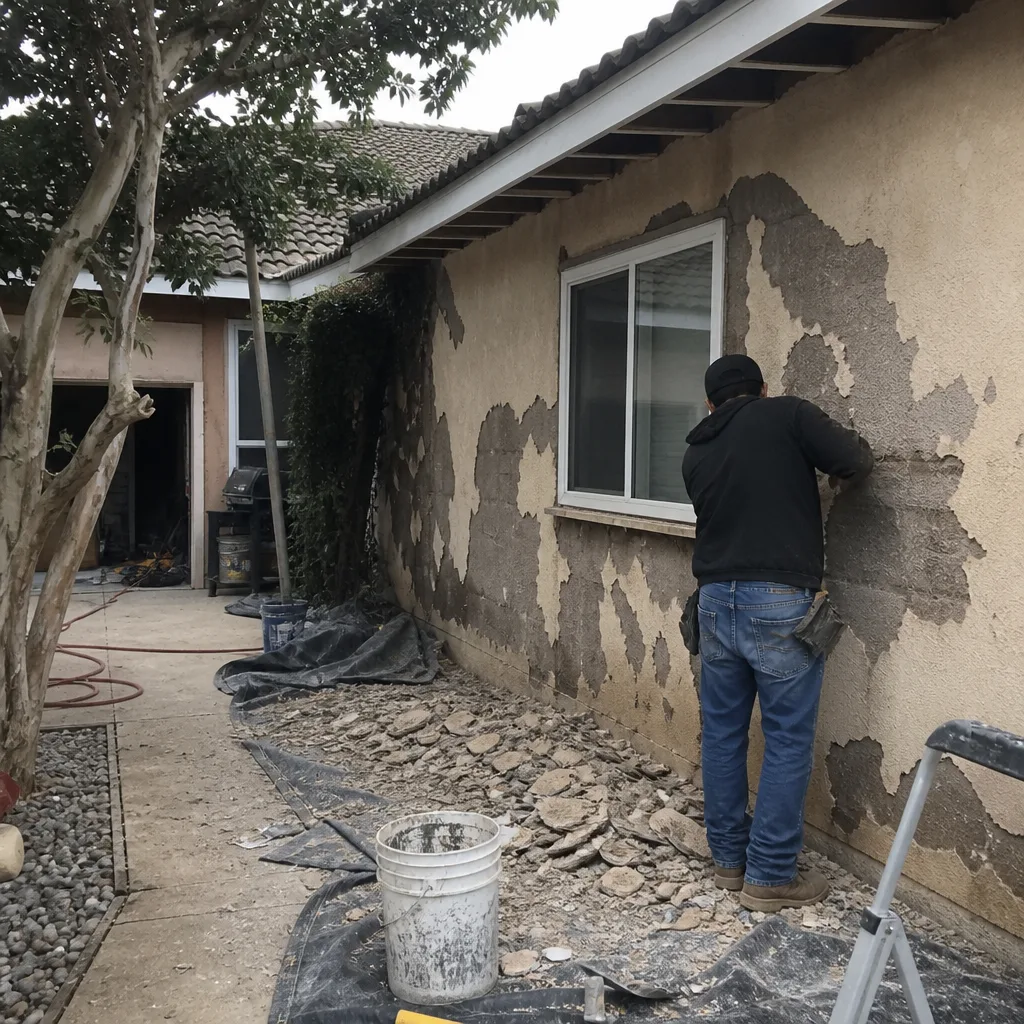
Lake Forest’s housing stock is overwhelmingly stucco over wood frame. Stucco is a durable system when installed correctly, but water intrusion failures tend to develop invisibly, inside the wall cavity, long before they show up as a visible stain on the exterior. By the time you see exterior staining, the damage is often months old.
The warning signs that matter in Lake Forest appear at specific locations:
- Window frame corners: Look at the stucco immediately below each window’s bottom corners. Hairline cracks that angle downward and outward are entry points for wind-driven rain. In Lake Forest’s winter storm patterns, wind drives rain against south and southwest-facing walls. These are the walls where we find the worst intrusion damage.
- Weep screeds: Every stucco wall should have a weep screed at the base, where the stucco meets the foundation stem wall. If the weep screed is buried under soil, concrete, or planter material, water that enters the wall cavity has no exit. It sits against framing and rots it from the inside. Walk your exterior walls and check that weep screeds are visible and clean. If you can’t see them, you have a problem.
- Garage wall interiors: Garages in Lake Forest tracts are often drywalled on the interior but lack insulation, which means moisture staining shows faster than in conditioned spaces. Push aside boxes and look at the interior face of any garage wall that is also an exterior wall. Water marks, efflorescence, blistered drywall tape, or musty odor in specific corners all point to exterior stucco failure.
- Staining at meter boxes and hose bibs: Penetrations through stucco need proper sealing, and in 30- to 50-year-old Lake Forest homes, that sealant has often failed. Look for darkened stucco rings around any exterior penetration.
If you find water intrusion, the fix usually isn’t localized. Stucco failures around windows mean the window installation details are wrong or the flashing has degraded. That’s a tear-out-and-replace situation on the affected wall, not a caulk-and-paint situation. A general contractor who handles full exterior envelope work, including window replacement and hardscaping that affects drainage, can address both the symptom and the cause. We carry James Hardie siding because we know that some Lake Forest homeowners, after the second stucco repair in the same wall, prefer to switch to a rainscreen system that drains properly. That conversation starts with honest assessment, not a product pitch.
Electrical and HVAC Warning Signs That Emerge Mid-Remodel
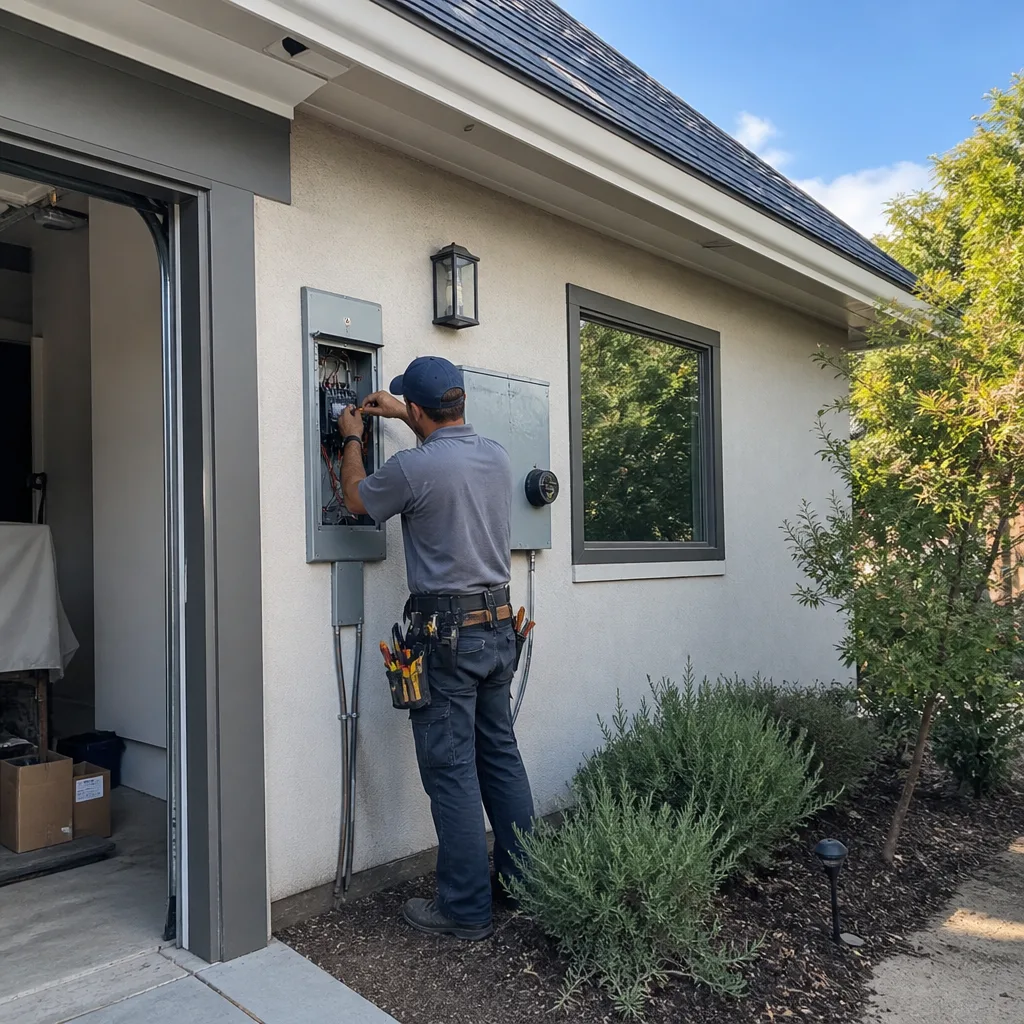
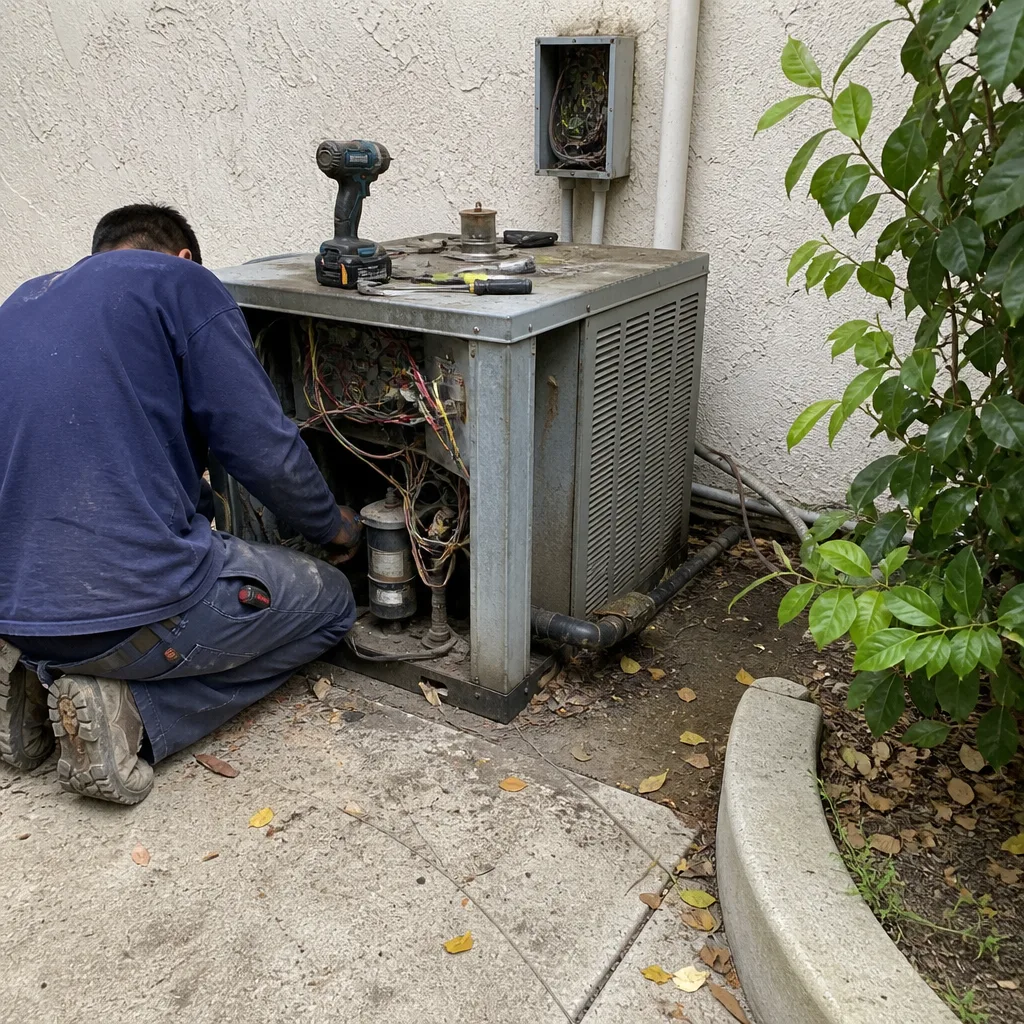
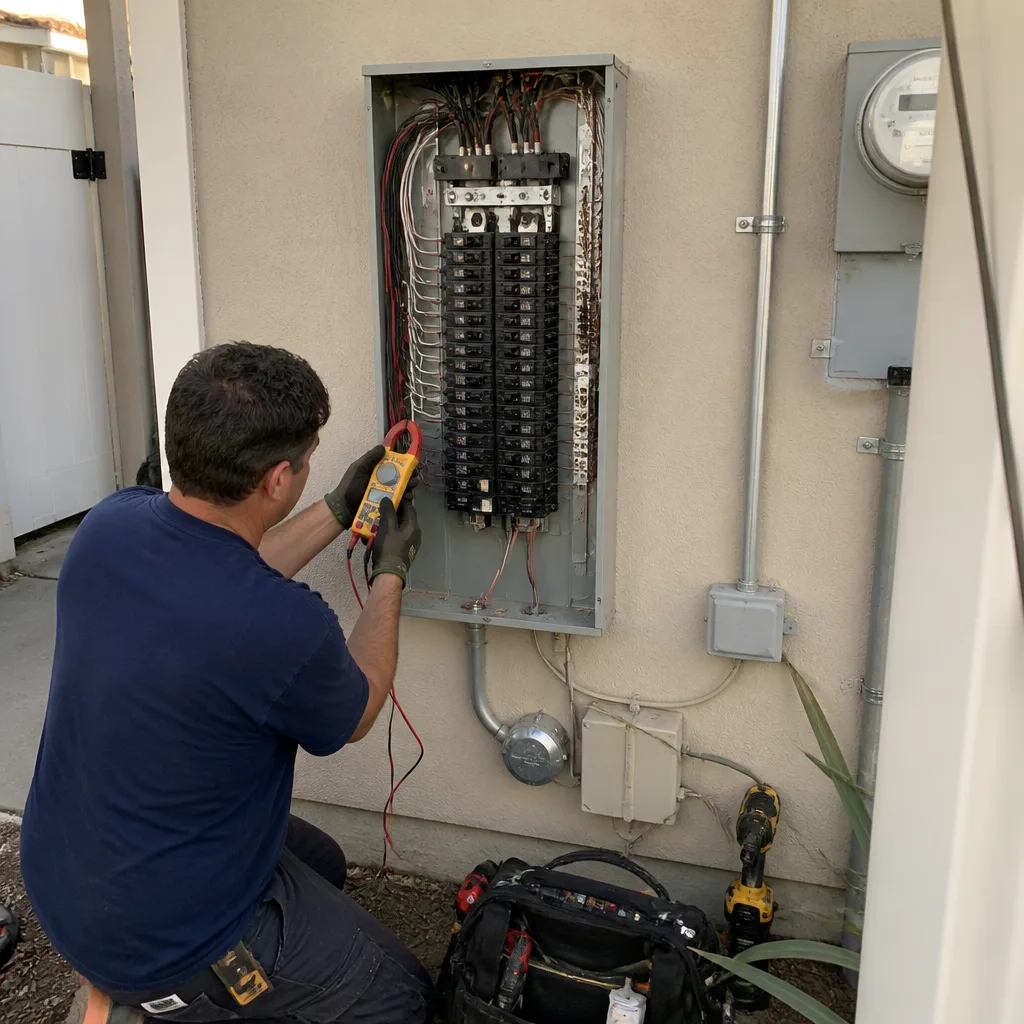
Most Lake Forest homeowners discover their home’s biggest problems halfway through a kitchen or bathroom remodel. You open a wall and find wiring that’s not grounded, a panel that’s been double-tapped, ductwork that’s separated, or a bathroom vent that dumps moist air into the attic instead of outside. This is normal for 30- to 50-year-old housing stock. What matters is what your contractor does about it.
What a general contractor is legally required to address:
- Life safety issues discovered in the work area. If we open a wall and find exposed knob-and-tube wiring, ungrounded circuits, or a panel that’s overheating, that has to be corrected as part of the permitted work. We can’t close the wall on a known hazard.
- Code compliance for modified systems. When we touch electrical, plumbing, or structural elements, the touched portion must meet current code. We can’t extend a circuit onto wiring that was grandfathered but is no longer safe.
- Documented conditions that will be concealed. If we find something we’re not required to fix, we’re still required to document it before covering it up. You get photos, dates, and a written record.
What a contractor can document and leave, with your written acknowledgment:
- Undersized but functional circuits in areas we’re not modifying.
- Original aluminum wiring in ceiling fixtures that are working safely but would require replacement if opened.
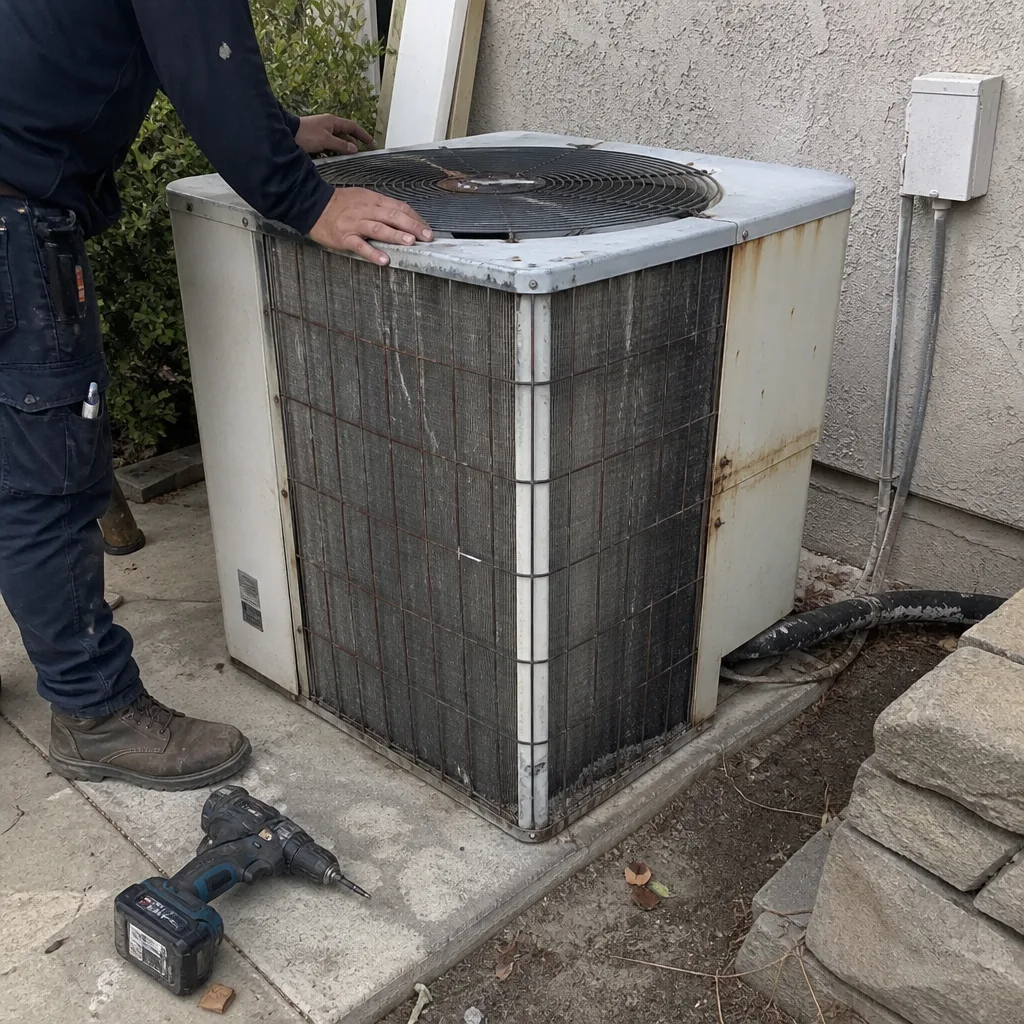
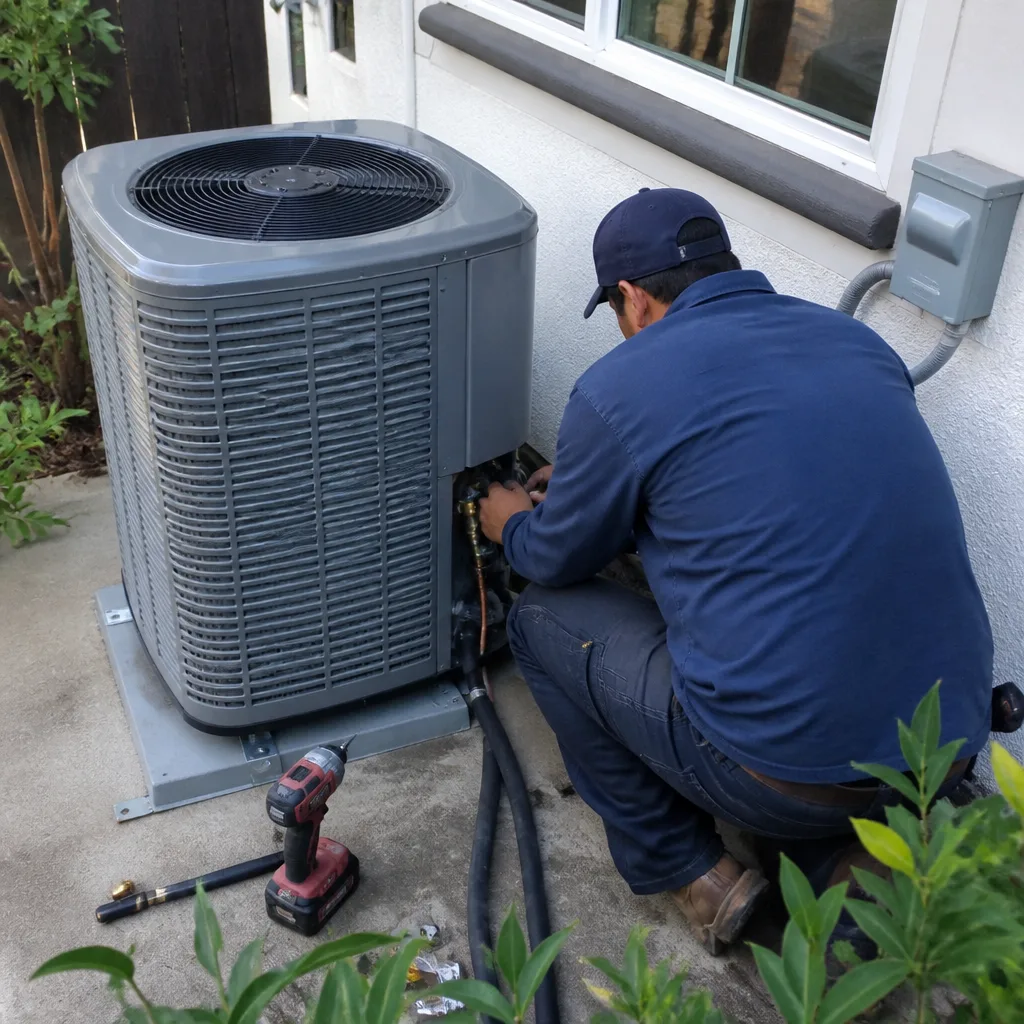
- HVAC ductwork with minor leaks in areas outside the remodel scope, if those leaks don’t create immediate health or safety risk.
- Original windows that don’t meet current energy code but are not part of the agreed project scope.
The distinction matters because it affects your budget and your leverage. When we present a discovery, we give you the choice: fix it now as part of the open permit, or document it and close the wall. We never make that decision unilaterally, and we never bury a problem without telling you. That’s the Square Deal operating standard: defined scopes, transparent findings, no surprise invoices.
For Lake Forest homeowners planning a significant remodel, the practical advice is this: budget 10 to 15 percent for discovery work on any home over 30 years old. The tract homes in this city were built to the electrical and mechanical code of their era, which means panel capacity that’s inadequate for modern kitchens, venting that was never designed for today’s range hoods, and HVAC systems that were undersized from day one. Finding these issues mid-remodel isn’t a failure. It’s the remodel doing its job.
If you’re planning a whole-home renovation or adding an ADU, these discoveries compound. An ADU requires new electrical service sizing, new subpanels, and often upgraded main panels. We work with prefab ADU manufacturers including Boxabl and Dvele, and their engineering requirements force the electrical conversation early, which is exactly when it should happen. A full-scope general contractor coordinates that conversation. A single-trade specialist often doesn’t.
How to Document Warning Signs for Insurance, Resale, and Warranty Claims
Documentation protects you in three specific situations: insurance claims, resale disclosures, and contractor warranty disputes. The process is the same regardless of which one you’re preparing for, and most Lake Forest homeowners do it wrong. They take one photo, maybe text a contractor, and move on. Six months later they can’t prove when the crack appeared, how fast it grew, or what it looked like originally.
Here’s a system that works:
- Date-stamp every photo. Your phone does this automatically, but make sure location services are on so the photo’s metadata includes the address. Screenshot the photo’s info screen if you’re not certain.
- Include a measurement reference. Place a quarter, a ruler, or a tape measure against the crack or stain before you photograph it. A crack that is a quarter-inch wide looks identical to one that is a half-inch wide in a photo without a reference object.
- Log observations in one place. A notes app is fine. A simple spreadsheet is better. Columns: date, location, description, measurement, weather conditions in the prior week, photo filename.
- Photograph the same defect every 90 days for a year. This is the minimum frequency that establishes a growth pattern in a claim or dispute.
- Keep contractor correspondence in writing. If a contractor tells you in person that something isn’t a problem, ask for that in an email. If they won’t put it in writing, that’s its own warning sign.
For insurance claims specifically, Lake Forest homeowners face two recurring situations: water damage from roof or stucco failures, and earth movement exclusions. Your standard homeowner’s policy typically excludes earth movement, which includes settlement and expansive soil damage. That means your cracking foundation is probably not covered. What may be covered is the water damage that results from a roof failure or pipe break. The distinction hinges on documentation: if you can show a specific storm event caused a sudden failure, you have a claim. If the damage accumulated slowly over years, the adjuster will call it maintenance neglect. Your documentation, with dates and photos, is the difference.
For resale disclosure, California law requires you to disclose known material defects. If you have a log showing the crack in the living room has been stable for three years, that’s a far better disclosure than one that says you saw a crack but never measured it. Buyers respect documented stability. They walk away from undocumented uncertainty.
For warranty claims, the same principle applies. If a contractor replaced your roof and you documented underlayment degradation before the replacement, and you see staining again 18 months later, that documentation anchors your warranty position. Without it, the contractor can argue the problem pre-existed their work.
This is where working with a Square Deal Contractors home full-scope GC changes the dynamic. We photograph every phase of our work, from demolition to final inspection, and we provide the client a complete photo archive at close-out. That’s not a marketing add-on. It’s standard practice for a contractor who expects to be audited against their own work.
Lake Forest Neighborhood Patterns: What We See in Specific Tracts
Lake Forest isn’t one housing market. It’s a collection of tracts built at different times with different construction standards and different geological conditions. We’ve worked in most of them, and certain patterns repeat predictably.
The Foothill Ranch area, built later on the city’s east side, tends to have better drainage and less fill settlement, but the homes have more complex roof geometries. More valleys, more intersections, more flashing failure points. The original tile roofs in that area are aging simultaneously, and we’re seeing a surge of re-paper and replacement projects as underlayment hits the end of its service life.
The tracts south of El Toro Road, toward the 5 freeway, are some of the oldest in the city and sit on deeper fill in places. We see more foundation movement there, more stucco cracking at window corners, and more garage slab settling. These are the homes where a full-scope General Contractor in Placentia is most often engaged for multi-trade work because the issues span foundation, exterior envelope, and interior finishes at once.
The neighborhoods around Lake Forest Drive and Trabuco Road, built mostly in the 1980s, have flat and low-slope roof profiles that are now hitting their second or third life. Some have been re-roofed once or twice. Some never have been. The ones that haven’t are showing the classic warning signs: ponding, blistering, and membrane separation at parapet walls.
What this means for a Lake Forest homeowner is simple: your house’s specific warning signs depend on which tract you’re in, what decade it was built, and which direction your walls face. A generic home inspection checklist won’t catch the patterns that matter here. Experience in this specific housing stock does.
For homeowners considering a larger Home Remodeling in Placentia, the discovery process often starts with the exterior. We always recommend addressing envelope and roof issues before opening interior walls. That sequencing prevents you from installing new finishes that get ruined by the leak you didn’t fix first.
Common Mistakes to Avoid
- Patching a recurring crack without investigating. If the same crack reappears within a year, patching it again is paying twice for the same failure. Lake Forest’s expansive soils mean cracks that reopen seasonally are communicating movement patterns, not drywall flaws.
- Ignoring garage wall moisture because the garage is “unfinished.” The garage shares framing with the rest of the house. Water entering through a garage wall can travel into living space above or beside it without ever showing a stain inside a finished room.
- Assuming a tile roof is fine because the tile looks fine. Tile is the wear surface. The waterproofing layer is underneath, and on Lake Forest homes built before 2000, that layer is nearing or past its lifespan regardless of how good the tile looks from the street.
- Letting a single-trade contractor diagnose a multi-trade problem. A roofer blames the flashing. A stucco company blames the windows. A foundation company blames the soil. A full-scope general contractor maps the interaction between systems. That’s the difference between chasing symptoms and fixing causes.
- Waiting until you’re ready to sell to document defects. By then you’ve lost months or years of evidence about whether the problem is stable or active. Buyers pay for certainty. Sellers pay for doubt. Documentation is free.
- Fixing a warning sign without understanding the permit requirements. Some Lake Forest repairs, particularly those involving structural or electrical work, require permits and inspections. Unpermitted repairs become disclosure liabilities at resale. A contractor who tells you to skip the permit isn’t saving you money. They’re transferring risk to you.
- Waiting to fix water intrusion until you see interior damage. Water doesn’t need dramatic exterior staining to rot framing. By the time you see the interior stain, the wall cavity has been wet for months. Investigate the exterior warning signs even when everything inside still looks fine.
When to Call a Professional
Call a professional when a crack measures wider than a quarter inch, when a door stops functioning at the same time every year, when roof ponding persists beyond 48 hours, or when you find moisture inside a garage wall. Call if you see two or more warning signs appearing in the same time frame, even if each one looks minor on its own. Several small warnings usually mean one systemic cause.
If you’re uncertain whether what you’re seeing is serious, that’s reason enough to get an assessment. Square Deal Contractors offers free estimates in Lake Forest. We walk the property with you, point out what we’re seeing, and tell you honestly whether a repair is urgent, scheduled, or something to simply monitor. Call (866) 623-7205 and we’ll set up a time. No obligation, no pressure, just a clear read on your house from a contractor who manages every phase of the work.
Frequently Asked Questions
A crack is serious if it’s wider than a quarter inch, diagonal from window or door corners, accompanied by sticking doors or windows, or has reappeared after a previous repair. Measure it with tape and monitor it for 90 days. If it grows, call a professional. Call (866) 623-7205 if you want a free assessment.
Lake Forest’s clay-heavy and engineered fill soils expand when wet and shrink when dry, creating seasonal movement that shows up as cracks in drywall, stucco, and concrete. Homes built on compacted fill, especially in hillside tracts, settle gradually for decades. Most cracking is settlement-related, but ongoing crack growth indicates something more serious.
Most standard homeowners policies exclude earth movement, including settlement and expansive soil damage, so foundation repairs are typically out of pocket. Water damage from sudden roof or pipe failures is more likely covered. Documentation with dates and photos determines which category your claim falls into.
Concrete tile itself often lasts 50 years or more, but the underlayment beneath it typically fails at 25 to 35 years. Many Lake Forest homes built before the year 2000 still have original underlayment and are due for re-paper or full replacement. Visible tile condition does not reflect the condition of the waterproofing layer.
Before remodeling, check for roof leaks at valleys and penetrations, stucco cracks at window corners, moisture staining in garages, and electrical panel capacity. Addressing envelope and structural issues before opening interior walls prevents new finishes from being damaged by problems you didn’t fix first.
Structural repairs, foundation work, electrical panel changes, and re-roofing typically require permits in Lake Forest. Cosmetic patching and painting do not. A contractor who recommends skipping required permits is transferring legal risk to you. Written estimates should clearly state whether permits are included.
The Bottom Line
Lake Forest homes are aging into a phase where the warning signs that matter are subtle patterns, not dramatic failures. A crack that returns signals ongoing movement. Roofing problems hide underneath good-looking tile. Stucco water intrusion develops invisibly inside walls. Documentation is your strongest tool in every claim, dispute, and resale you’ll ever face.
You don’t need to become a building scientist to protect your home. You need to recognize the patterns outlined in this guide, log what you see, and call a contractor who looks at the whole system rather than an isolated symptom. For more guides & resources on protecting your Lake Forest home, explore our blog. Square Deal Contractors has been serving Lake Forest homeowners since 2013, and our approach to warning signs is the same as our approach to everything else: we’ll tell you exactly what you’re getting and why. Call (866) 623-7205 for a free estimate.
Written by the team at Square Deal Contractors, serving Lake Forest since 2013.
See the difference
 Before
 After
 Before
 After
 Before
 After