
Last updated October 30, 2026
 Home additions & ADU
 Kitchen remodeling
 Bathroom remodeling
 Roofing
 Windows & doors
 Driveway & pavers
 Fence
Free written scope consultation - allowances, timeline, and change-order rules on paper before a single trade is scheduled
Seasonal Construction Care for Lake Forest: Year-Round Homeowner’s Guide
Most Lake Forest homeowners winterize for rain but ignore the structural stress that comes right before it: the late-summer heat spike combined with dry Santa Ana winds that crack caulk, bake roof membranes, and open gaps in exterior trim before the first drop of rain arrives. This guide breaks down what actually happens to a Lake Forest home across four distinct seasonal pressure cycles, and how to stay ahead of each one. For a broader look at local building considerations, see our The Complete Guide to Construction in Lake Forest. You’ll learn what to inspect, when to inspect it, and what genuinely needs a professional eye versus what you can handle in a Saturday afternoon. By the end, you’ll have a maintenance framework that turns seasonal upkeep from reactive guesswork into a predictable routine.
Styles & brands we work with
Quick Answer
Seasonal home maintenance in Lake Forest, CA works best when you treat the year as four distinct pressure cycles: the August – September Santa Ana prep window for heat and wind damage, the October – November drainage and gutter season, the December – February freeze and flatwork season, and the March – April post-rain assessment period. Each cycle has specific inspection points tied to Lake Forest’s clay soil, canyon-adjacent wind corridors, and north-facing frost patterns. A documented seasonal log is the single most valuable tool for insurance claims, resale inspections, and catching small failures before they become five-figure repairs.
Table of Contents
- Late Summer (August – September): The Santa Ana Prep Window
- Fall Transition (October – November): Gutters, Drainage, and Clay Soil Reality
- Winter (December – February): Frost, Flatwork, and the North-Facing Factor
- Spring (March – April): Post-Rain Assessment Before the Heat Returns
- Building a Seasonal Maintenance Log That Actually Holds Up
- The Home Envelope: Why Caulk, Paint, and Stucco Need a Seasonal Rhythm
- Hardscape and Drainage: Lake Forest Soil Conditions You Can’t Ignore
- Common Mistakes to Avoid
- When to Call a Professional
- Frequently Asked Questions
- The Bottom Line
Late Summer (August – September): The Santa Ana Prep Window
Lake Forest sits far enough inland that August and September bring sustained daytime temperatures in the 90s, often with single-digit humidity when the Santa Anas kick up. Those winds don’t just dry out landscaping. They bake roof membranes, shrink caulk beads, and pull moisture out of exterior paint at an accelerated rate. The result is a specific pattern we’ve seen across Lake Forest tract homes and custom builds alike: hairline cracks open in stucco, window and door sealant pulls away from framing, and roof flashing that was watertight in June starts to flex by September.
The critical window is the six to eight weeks before the first significant rain event. That’s when you want to address heat and wind damage while everything is still dry. Here’s what to inspect, in order of priority:
- Roof penetrations and flashing. Walk the perimeter with binoculars and look at every vent stack, skylight curb, and chimney chase. The sun’s UV load in Lake Forest degrades the sealant around these penetrations faster than the shingles or tiles themselves. If you see cracked, curled, or separated sealant at a penetration, that’s a leak waiting for the first rain.
- Exterior caulk and trim joints. Check every window and door perimeter, especially on south and west exposures. Santa Ana winds carry abrasive dust that works its way into dried caulk and accelerates gap formation. A ⅛-inch gap at a window corner can channel significant water in a heavy downpour.
- Attic ventilation and insulation displacement. The late-summer heat spike is when you’ll notice if attic ventilation is inadequate. Heat-warped insulation, visible gaps at the eaves, or a ventilation system that can’t keep the attic within 10 – 15 degrees of outdoor temperature means your cooling load and your roof deck are both paying the price.
- Dry vegetation and fence line clearance. Even though Lake Forest isn’t in a high-severity wildfire zone like canyon communities further east, the interface areas along the 241 and near Whiting Ranch create elevated risk corridors. Keeping dry brush cleared from the fence line and maintaining at least 5 feet of defensible space around the structure is back-of-the-envelope insurance against wind-driven embers.
If you’re planning any exterior work – roofing, windows, siding, or fencing – late summer is actually one of the best times to schedule it. Contractors in Lake Forest typically have more calendar flexibility before the fall rush, and the dry weather window gives sealants and coatings proper cure time. We’ve helped homeowners across the city replace skylights, reflash chimneys, and reseal entire window packages during this window, and the before-and-after difference in interior comfort is immediately noticeable. For a broader look at how a full exterior envelope project comes together, our home renovation approach walks through the process.
Fall Transition (October – November): Gutters, Drainage, and Clay Soil Reality
Lake Forest isn’t known for heavy annual rainfall, but when it does rain, the city’s clay-heavy soil changes how water behaves around your foundation. Clay expands when wet and contracts when dry. Over repeated cycles, that expansion and contraction creates pressure against foundation walls and shifts the grade around your home. The practical consequence: drainage that worked fine last year may not work this year, because the soil itself has subtly changed its capacity to absorb water.
The fall transition is your drainage system’s moment of truth. The goal is to move water away from the foundation before it has a chance to saturate the clay adjacent to your slab or stem wall.
What to Address in October and November
- Gutter and downspout function. Clean gutters are the baseline. But Lake Forest’s eucalyptus and sycamore debris is fine enough to clog even clean-looking systems. Run a hose through each gutter run and watch the downspout discharge. Water should exit at least 3 – 4 feet from the foundation. If a downspout is dumping right at the corner of the house, add an extension or a splash block before the rainy season.
- Lower-lying tract areas. Several neighborhoods in Lake Forest, particularly older tract developments along El Toro Road and near the lake basin itself, sit at lower elevations where storm runoff concentrates. These homes experience flash-flooding risk during short, intense rain events even when the official forecast sounds mild. If your street has ever pooled water during a storm, the problem will repeat – and probably worsen as surrounding development changes runoff patterns.
- Foundation and grade inspection. Walk the full perimeter after the first light rain. Look for any area where water is puddling against the foundation or where the soil has settled to create a negative grade (sloping toward the house). A simple fix now – adding soil and compacting it to slope away – prevents thousands of dollars in foundation issues later.
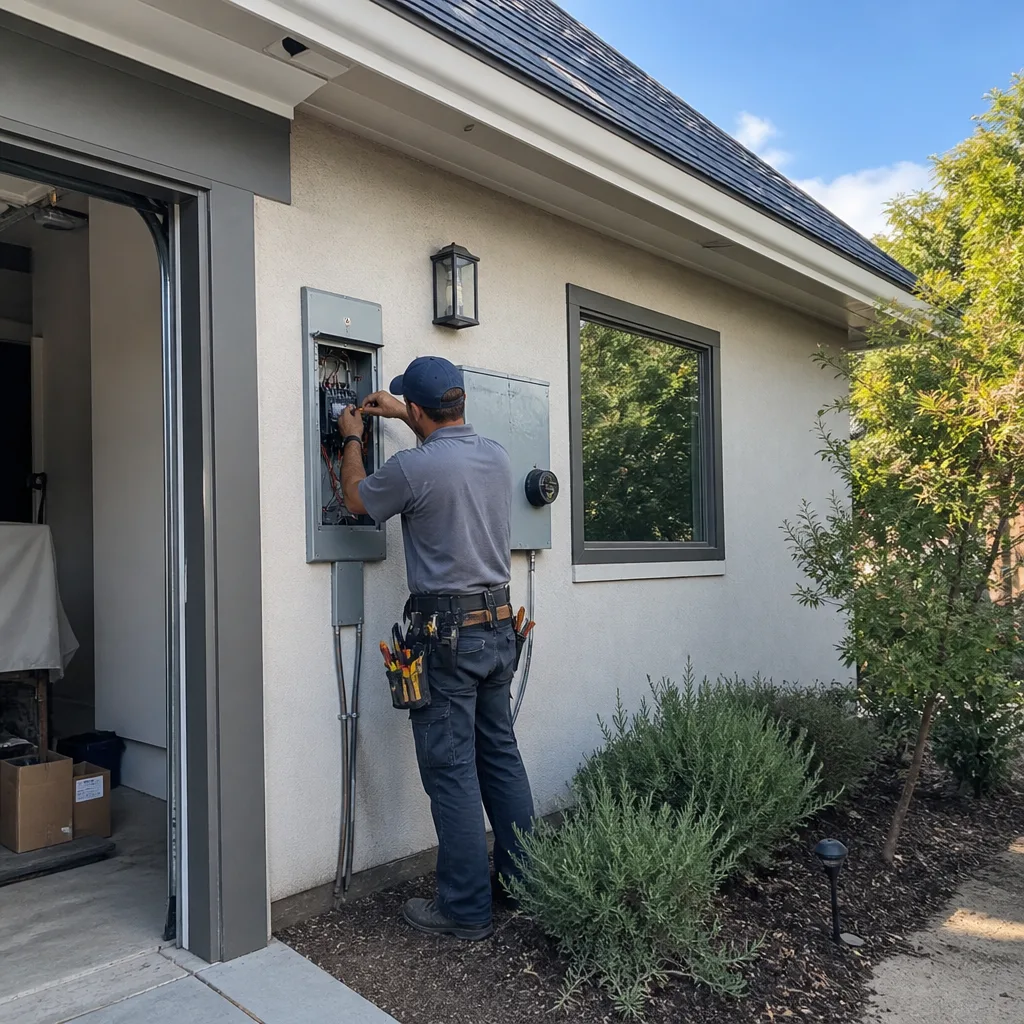
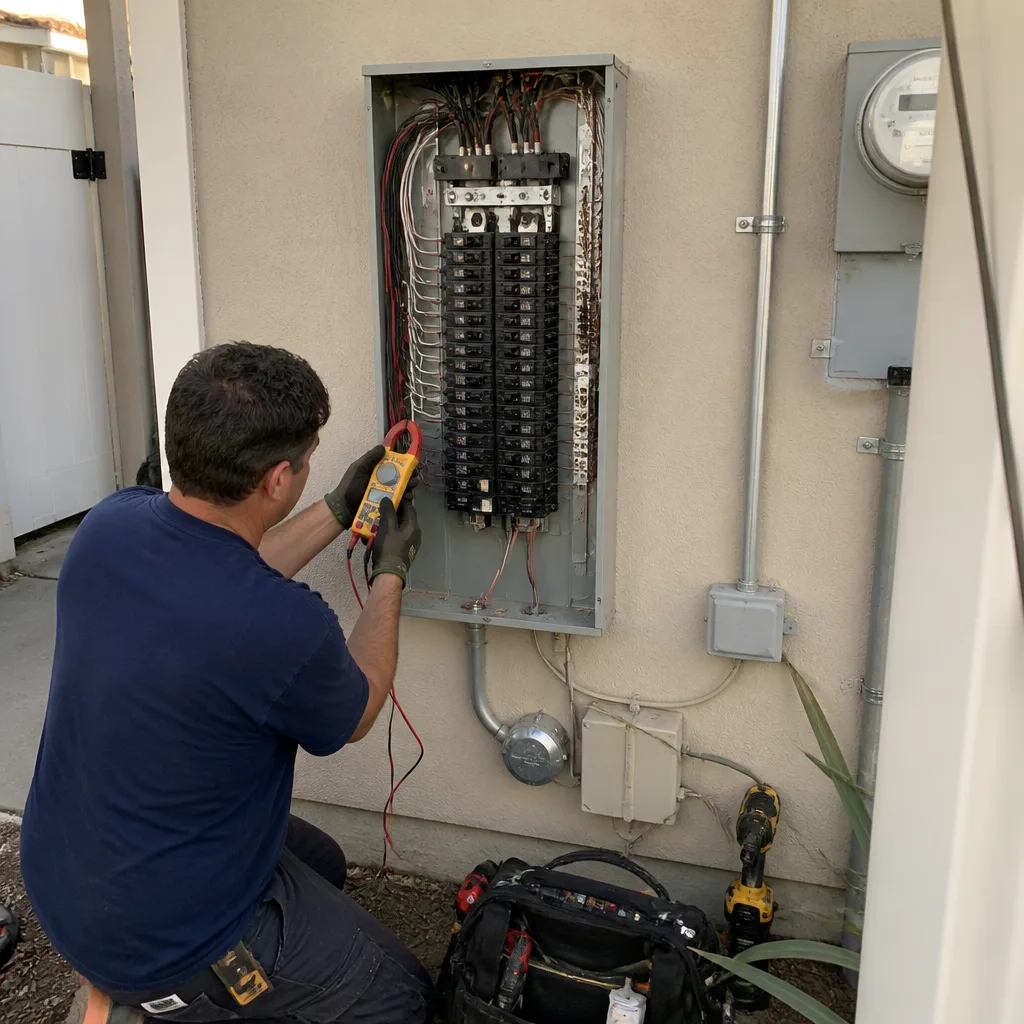
- Outdoor electrical and lighting. Fall is the time to check that all exterior outlets have working GFCI protection and that landscape lighting connections are sealed. The dry summer may have degraded the weatherproofing on junction boxes, and that first rain becomes the test.
For homeowners who are also thinking about broader improvements, fall is a smart time to pair drainage fixes with other exterior work. If you’re already dealing with gutter replacement, it’s often economical to address fascia board rot, soffit repair, or even a full window upgrade at the same time. Coordinating those trades under one contract is exactly the kind of scope management where having a true general contractor pays off. One accountable party, one coordinated schedule, no runaround.
Winter (December – February): Frost, Flatwork, and the North-Facing Factor
Lake Forest doesn’t get hard freezes the way the Inland Empire interior does, but it gets enough of a chill to matter. Overnight temperatures in the upper 30s are common in December and January, and sub-32°F readings occur several times most winters, particularly in the lower elevations near the lake and in canyon-adjacent pockets. Combined with the area’s morning marine layer, those temperatures create a specific frost pattern that hits north-facing exposures hardest.
Where Winter Damage Actually Shows Up
- Irrigation systems. The most common winter failure we see in Lake Forest is cracked PVC valve manifolds and sprinkler heads. Water left in the system expands when temperatures dip overnight, and the shallow lateral lines running under planters and walkways are the vulnerable points. If you haven’t installed a master shut-off valve or drained the system by late November, do it now. The cost to repair a cracked manifold is usually a few hundred dollars. The cost to repair the landscape damage from an undetected leak behind a planter wall is considerably more.
- Outdoor plumbing and hose bibs. Frost-proof hose bibs work only if the water can drain out of the valve body when shut off. If a hose is left attached, water remains in the supply line and freezes back into the wall. Every winter, we see damage that could have been prevented by simply disconnecting hoses before the first cold snap.
- Concrete flatwork on north-facing exposures. This is the subtle one. Concrete driveways, walkways, and pool decks on the north side of a home receive less direct sun, stay damp longer after rain, and experience more freeze-thaw cycles than sunnier exposures. Over multiple winters, that thermal cycling causes surface spalling – small flakes of concrete breaking away. If you notice new spalling each winter, the flatwork may also have a drainage or mix design issue that outlasts any single season.
- Stucco and paint on shaded walls. North-facing stucco walls that hold moisture through the winter are prone to efflorescence (white mineral deposits), paint blistering, and mold growth at the soil line. Winter is when you’ll see these signs first. The fix is rarely just repainting. The underlying moisture pathway needs to be addressed.
One practical winter habit that pays off: after any rain event, walk the perimeter and photograph anything that looks different from the last inspection. North-facing wall dampness, new cracks in flatwork, or a downspout that’s not draining properly. Those dated photos become the backbone of your maintenance log, which we’ll get to later in this guide.
If you’re a homeowner who’d rather have a professional handle this seasonal assessment as part of a broader renovation conversation, Square Deal Contractors covers the full scope from roofline to backyard. The right winter inspection often reveals the same issues that a spring remodel would need to address anyway. Our Square Deal Contractors home page gives an overview of how we approach multi-trade projects.
Spring (March – April): Post-Rain Assessment Before the Heat Returns
By March, Lake Forest’s brief rainy season is winding down and the spring marine layer is setting in. This is the most valuable assessment window of the year, but it’s also the one most homeowners skip. The reasoning usually goes: it didn’t rain that much, so nothing changed. That assumption is wrong in ways that quietly compound.
Even in a below-average rainfall year, the combination of winter moisture, morning fog, and temperature swings leaves measurable impact on your home. And the window to address those impacts cheaply is short – once late spring heat arrives, sealants set too fast, paint won’t cure properly, and contractor schedules fill up.
Your March – April Inspection List
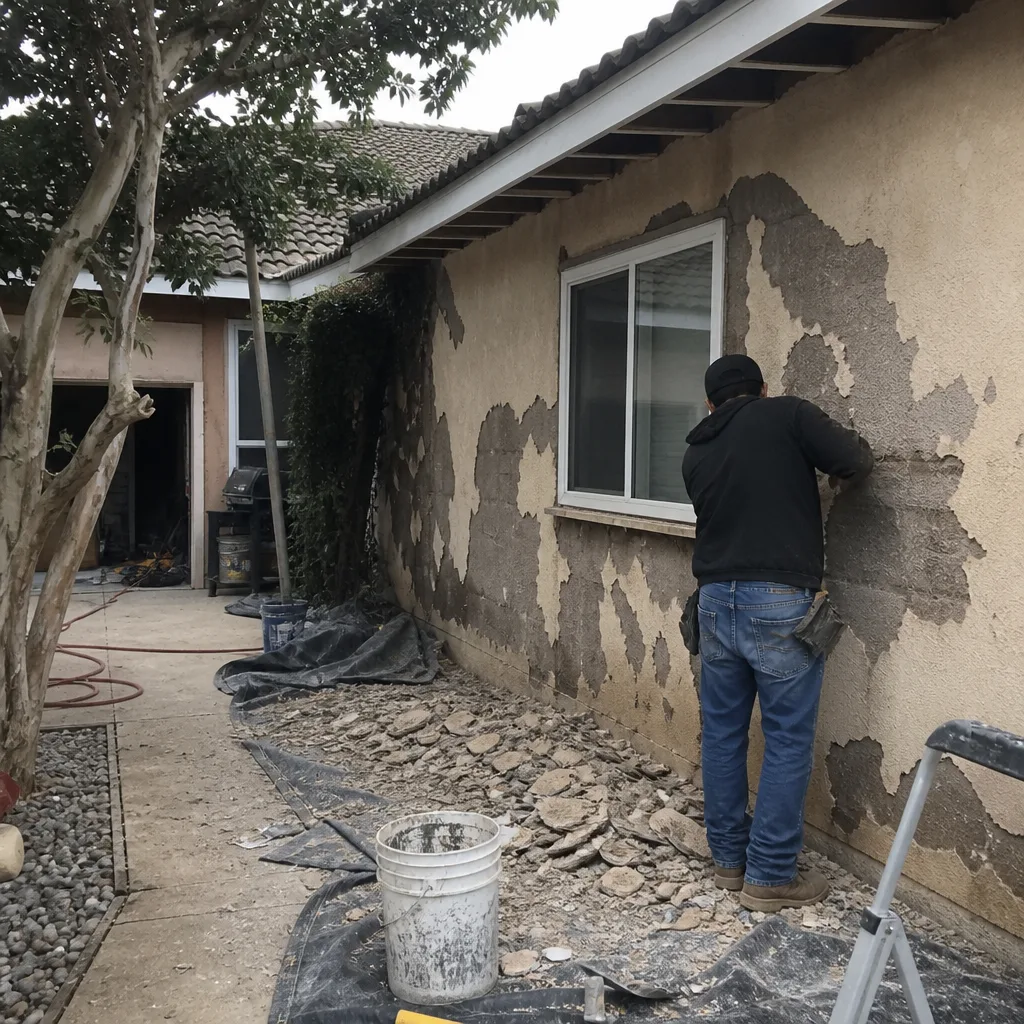
- Stucco and exterior paint. Look for new hairline cracks around window corners, at wall-to-soffit transitions, and along control joints. These are stress points where winter moisture and mild thermal movement created new fractures. Fill and seal them now, before summer heat expands the material and makes proper adhesion harder.
- Foundation drainage. Check that soil has not settled over the winter to create new low spots against the foundation. The wet-dry cycles of Lake Forest’s clay soil make settling an ongoing process, not a one-time fix.
- Roof inspection after the rain. If you haven’t been on the roof or done a binocular inspection since fall, do it now. Missing granules, lifted shingle edges, and debris accumulation in valleys are all easier to see in soft spring light than in summer glare.
- Exterior wood trim and fascia. Rot and termite activity both show up more clearly in spring. Tap fascia boards with a screwdriver handle. If they sound hollow or feel soft, you’ve got a moisture or pest issue that needs attention before summer.
- Windows and doors operation. Test every window and sliding door for smooth operation. Winter moisture can swell wooden frames and cause binding. That’s a signal that drainage or sealing at the rough opening may need attention.
Spring is also when many Lake Forest homeowners start planning renovation work for late summer or fall. The logic holds: if you’re going to redo a kitchen or bath anyway, and your post-rain assessment reveals exterior issues, it’s often cheaper to bundle the scope. A full home remodeling project that includes exterior envelope repairs alongside interior work avoids paying for mobilization and permitting twice.
Building a Seasonal Maintenance Log That Actually Holds Up
Here’s a place where almost every homeowner gets it wrong: they rely on memory. They remember the crack in the driveway got bigger, but not whether it grew ⅛ inch or a full inch in twelve months. They remember the gutter overflowed once, but not which storm it was or which side of the house it happened on. Memory is the enemy of good maintenance, and the fix is remarkably simple.
A seasonal maintenance log is a dated record of what you observed, what you fixed, and what you deferred. It doesn’t need to be elaborate. A simple notebook, a spreadsheet, or a folder of dated photos on your phone all work. The key is consistency: the same inspection points every season, documented the same way.
What to Record Each Season
- Date and general weather context. “February 10, after three days of light rain” tells a much better story than “winter inspection.”
- Condition of specific systems. Roof penetrations, gutter flow, drainage discharge points, stucco cracks, flatwork condition, paint adhesion, window operation, and any new signs of water intrusion.
- Photos with landmarks. When you photograph a crack or a stain, include a reference point in the frame – a corner of the house, a fence post, a specific window. That makes before-and-after comparison possible across seasons.
- Actions taken and deferred. What did you repair, patch, or replace? What did you decide to watch for another season? That decision trail is what makes the log useful.
The log’s real value shows up in two scenarios. First, an insurance claim: if you’ve documented a water intrusion point over multiple seasons and can show when it first appeared, your claim position is materially stronger than if you’re relying on a verbal recollection. Second, a resale inspection: buyers and inspectors respond to documented maintenance history. A home with a log that shows consistent seasonal care is easier to defend in a transaction than one where the condition history is a mystery.
We’ve seen this play out in Lake Forest specifically. When a seller can hand over three years of dated, photo-backed maintenance records, the inspection negotiation shifts from “what’s wrong with this house” to “here’s what has been addressed and here’s what’s still on the watch list.” That’s a completely different conversation.
The Home Envelope: Why Caulk, Paint, and Stucco Need a Seasonal Rhythm
The home envelope is the continuous barrier between conditioned interior space and the outside environment. In Lake Forest’s mild climate, that barrier is under a different kind of stress than in a true four-season location. Here, the issue isn’t extreme temperature swings as much as it is repetitive moderate swings, UV degradation, and wind-driven dryness.
Caulk and sealant are the weakest links in the envelope. A high-quality polyurethane or modified-silicone sealant installed properly should last 5 – 7 years in Lake Forest conditions. But Lake Forest conditions aren’t uniform. A west-facing window bank that gets full afternoon sun and direct Santa Ana wind exposure may need resealing in 3 – 4 years. A shaded north-facing window might go 8 years. The only way to know which is which is to inspect on a schedule and note what you find.
Stucco works the same way but on a longer clock. Lake Forest’s stucco homes, particularly those built in the 1970s through 1990s tract developments, develop hairline cracking along stress points over time. The cracks themselves aren’t usually structural, but they become water entry points if left unfilled. The seasonal rhythm to manage is: identify and fill new cracks in spring, before the summer heat expands the surrounding material and makes the repair less durable.
Paint is the canary. If paint is failing on a particular wall, that wall is telling you something about moisture, sun, or adhesion that goes beyond the paint film itself. Repainting without addressing the underlying condition is the most common repeat-expense mistake we see. A wall that gets morning shade and afternoon sun on the south side of the house will always fail faster than any other exposure. Understanding that pattern helps you budget for paint on a schedule that matches reality rather than a generic “every 7 – 10 years” rule.
Hardscape and Drainage: Lake Forest Soil Conditions You Can’t Ignore
The clay soil underneath Lake Forest is the single most overlooked factor in home maintenance. It’s why some driveways crack in a predictable pattern, why certain retaining walls lean over time, and why landscapes that look fine in summer become saturated and unstable in winter.
Beyond the foundational concerns, hardscape maintenance follows a distinct seasonal pattern. In late summer, the priority is checking for stress cracks in concrete, paver settlement, and retaining wall movement when the soil is at its driest and most contracted. Those dry-season cracks are where winter rain will enter and accelerate damage. In winter, the priority shifts to drainage – making sure no hardscape area is holding water against a structure. In spring, after the soil has rehydrated and begun to expand, the focus turns to assessing what moved over the winter and planning repairs before the summer heat locks in the current conditions.
For homeowners with larger lots or sloped terrain, drainage and hardscape work often requires coordinating multiple trades: grading, concrete or paver installation, drainage pipe runs, and sometimes retaining wall engineering. If you’re weighing how to select the right partner for this, our Choosing the Right Construction Brand: A Buyer’s Guide for Lake Forest covers what to look for. That’s a scope where trying to manage separate contractors quickly becomes a coordination headache. One contractor managing the full scope, from grading to finish hardscape, is the difference between a project that runs on schedule and one that stalls waiting for the next sub to become available.
If you’re evaluating hardscape upgrades alongside other exterior work – fencing, decking, or an ADU – the seasonal maintenance conversation is a natural place to start. We can assess the current condition and tell you exactly what you’re getting and why before any quote is written.
Common Mistakes to Avoid
- Treating maintenance as a single annual event. Lake Forest’s mild climate hides the fact that different systems experience different pressure peaks at different times of year. An annual fall inspection misses the winter frost damage and the early-summer crack formation. A seasonal rhythm works; an annual checklist doesn’t.
- Ignoring the late-summer window. The weeks before the first rain are the most important inspection period of the year, but most homeowners wait until the rain starts to look at anything. By then, the damage is already happening behind the scenes.
- Failing to account for clay soil movement. Lake Forest’s expansive clay means grading and drainage are dynamic conditions. If you fixed a drainage issue two years ago and haven’t rechecked it, the soil has likely shifted enough to change how water flows around your home.
- Repainting over moisture problems. When paint blisters or peels on a specific wall, that wall is telling you about a moisture pathway, not just a paint failure. Covering it with new paint sends the same moisture problem looking for a new exit, usually somewhere more expensive.
- Skipping the maintenance log. Without dated records, you’re negotiating with insurance adjusters and home inspectors from a position of guesswork. The log is not busywork – it’s evidence.
- Deferring small sealant repairs until “next year.” A $50 tube of sealant applied in September prevents a $2,500 stucco repair in March. The math on deferred exterior sealant work is the worst trade in homeownership.
- Coordinating trade work through multiple contractors instead of one accountable partner. Homeowners who hire a roofer, a window installer, and a stucco contractor separately learn the hard way that trades don’t coordinate themselves. When one trade’s work covers up another trade’s unfinished job, responsibility dissolves.
When to Call a Professional
Most seasonal inspection and light maintenance is within a homeowner’s capability, but certain findings warrant a professional assessment. If you discover water intrusion at any point during the year, especially in a ceiling or wall cavity, don’t wait to see if it reoccurs. If a roof inspection reveals lifted shingles, cracked flashing, or missing sealant at penetrations, schedule a repair before the next rain event. If you see new or expanding cracks in stucco, flatwork, or retaining walls, a structural or moisture assessment may be needed. And if you’re managing multiple deferred maintenance items across different trades, the value of a single accountable contractor becomes obvious quickly. Our The Complete General Contractor Guide for Lake Forest Homeowners explains how this works in practice. Square Deal Contractors offers free estimates in Lake Forest – call (866) 623-7205 and we’ll walk the property with you, identify what’s urgent, and give you a straight answer on what it costs to address.
Frequently Asked Questions
Seasonal maintenance costs in Lake Forest typically range from $200 – $600 per season for professional inspection and minor repairs, depending on the home’s size and condition, with larger repairs like roof flashing replacement or stucco patching falling in the $800 – $3,000 range. The biggest cost driver is deferral: a $150 sealant repair done in September prevents a $2,500 stucco repair in March. Call (866) 623-7205 for an exact assessment of your home – estimates are free.
Yes, and the reason is Lake Forest’s specific climate pattern: late-summer heat and Santa Ana winds cause one type of damage, winter moisture and occasional frost cause another, and the transitions between seasons are when the damage from one cycle becomes visible and repairable before the next cycle compounds it. Four short inspections of 15 – 30 minutes each consistently outperform one long annual inspection because you’re catching problems in the stage where they’re still cheap to fix.
The most common issue we see is failed sealant at roof penetrations and window perimeters, driven by the combination of UV exposure and Santa Ana wind abrasion during the late-summer window. It’s easy to miss because the gaps are small, but those small gaps channel significant water during the first heavy rain. Call (866) 623-7205 if you want a professional sealant assessment – we’ll tell you exactly what needs attention and what’s still sound.
It depends on the type of damage and your policy specifics, but insurance typically covers sudden and accidental damage from wind or rain, while damage from deferred maintenance is generally excluded. That’s the practical value of a documented seasonal maintenance log: it demonstrates that you’ve been maintaining the home, which strengthens your position when a claim involves a dispute over what was pre-existing versus what was sudden.
Light inspection, gutter cleaning, hose disconnection, drain testing, and documentation are well within most homeowners’ capabilities. Professional help is warranted for roof work, stucco repair, any water intrusion, and any situation where multiple trades need to be coordinated. The dividing line is risk: if you’re not comfortable on a ladder or roof, or if the issue involves water, structure, or electrical, call a professional.
The post-rain spring assessment often reveals exterior issues – stucco cracks, sealant failures, drainage problems – that are cheaper to resolve as part of a larger remodeling project than as separate repairs. If you’re already planning a kitchen, bath, or whole-home renovation, bundling the exterior envelope work adds efficiency and avoids paying for permits, mobilization, and trade coordination twice. Square Deal Contractors operates as one contractor across the full scope, from home remodeling to exterior hardscape.
The Bottom Line
Lake Forest’s mild weather fools homeowners into thinking their homes face mild stress. The reality is that four distinct seasonal pressure cycles – late-summer wind and UV, fall drainage demands, winter frost and moisture, and spring post-rain settling – each leave measurable impact. The homes that hold up best belong to owners who inspect on a seasonal rhythm, document what they find, and act while repairs are still small. If you’d rather hand that responsibility to a contractor who will tell you exactly what’s happening and what it costs to fix, the team at Square Deal Contractors is ready to walk your property with you. You can also explore more guides & resources on seasonal care and home improvement. And if a larger renovation is on your radar, we’ll help you see the full picture – from roofline to backyard – before you spend a dollar on the wrong thing first.
Written by the team at Square Deal Contractors, serving Lake Forest since 2013.
See the difference
 Before
 After
 Before
 After
 Before
 After