
Last updated October 30, 2026
 Home additions & ADU
 Kitchen remodeling
 Bathroom remodeling
 Roofing
 Windows & doors
 Driveway & pavers
 Fence
Free written scope consultation - allowances, timeline, and change-order rules on paper before a single trade is scheduled
General Contractor Maintenance Checklist for Lake Forest Homeowners
Santa Ana wind events above 60 mph are recorded in the Lake Forest area multiple times per year, yet most homeowner maintenance guides treat wind as an afterthought buried under “inspect your roof annually.” That’s a costly oversight. The warm, dry gusts that sweep down through the Santa Ana Mountains in the fall and winter don’t just scatter patio furniture – they lift shingles, stress fence posts at their base, and drive fine dust into window tracks and door seals. This guide is built specifically for the homes, soil, and weather patterns of Lake Forest, and it walks you through what General Contractor services actually cover when evaluating a home here, season by season. By the end, you’ll know what to inspect yourself, when to call a single-trade specialist, and when the problem spans enough systems that a general contractor is the more cost-effective call.
Quick Answer
A home maintenance checklist for Lake Forest should prioritize pre- and post-Santa Ana wind inspections of roofing, fencing, and exterior cladding; seasonal gutter cleaning timed to the area’s low 13-inch annual rainfall; concrete and hardscape monitoring on the city’s expansive clay soils; and window and door seal checks on homes built during the 1970s through 1990s construction boom. The most efficient approach is to run through a full exterior check each fall before wind season and again in late winter after the rains taper off. Deferred maintenance on any one system – a lifted shingle, a sagging fence line, a leaking window seal – creates cascading repair costs in adjacent systems within 12 to 24 months.
Styles & brands we work with
Table of Contents
- Santa Ana Wind Preparation and Recovery: The Lake Forest Wildcard
- Roofing and Exterior Cladding: What the Wind Actually Damages
- Gutters and Drainage in a 13-Inch Rainfall Climate
- Concrete, Hardscape, and Lake Forest’s Clay-Heavy Soil
- Window and Door Seals for 1970s – 1990s Housing Stock
- Fencing and Wind Load: The Most Overlooked Santa Ana Failure Point
- The Seasonal Maintenance Calendar for Lake Forest
- When to Call a General Contractor vs. a Single-Trade Specialist
Santa Ana Wind Preparation and Recovery: The Lake Forest Wildcard
Most maintenance checklists written for Southern California treat wind as a secondary concern behind rain. In Lake Forest, that order is backwards. The city sits directly in the path of Santa Ana winds that funnel through the canyons of the Santa Ana Mountains, and these events arrive with sustained speeds that coastal Orange County cities rarely experience. We’ve walked properties in Lake Forest after a single wind event where the damage pattern was clear and consistent: shingles lifted on the windward roof plane, fence posts leaning at the soil line, and dry debris packed into every gap in the exterior envelope.
A practical wind preparation checklist for Lake Forest homeowners looks like this:
- Before wind season (September through October): Walk the property and remove or secure anything that can become a projectile. This includes patio umbrellas, lightweight furniture, unsecured trellises, and any loose construction debris. A 65 mph gust turns a plastic chair into a window-breaker.
- Inspect roof edges and ridgelines: Pay attention to the windward side, which in Lake Forest is typically the northeast-facing slope. Look for shingles that have lost their adhesive bond, exposed nail heads, or any lifting at the edges. GAF and other asphalt shingle manufacturers rate products for specific wind speeds, but even high-rated shingles fail when the original installation was sloppy.
- Check all exterior vents and screens: Santa Ana winds carry fine dust and debris. Gable vents, crawl space vents, and attic screens with gaps allow that dust into spaces where it clogs insulation and reduces its effectiveness.
- After each major wind event (October through January): Re-walk the property within 48 hours. Look for shingles on the ground, lifted flashing, damaged fence sections, and any exterior fixture that has shifted.
The pattern we see repeatedly in Lake Forest neighborhoods is that wind damage is rarely catastrophic in one event. The first Santa Ana loosens a shingle. The second lifts it further. The third one, combined with the first real rain, turns a minor issue into a leaking roof deck. Regular post-wind checks are the cheapest water damage insurance you can buy.
Roofing and Exterior Cladding: What the Wind Actually Damages
Roof failures in Lake Forest don’t follow the same pattern as roof failures in the Pacific Northwest or the Midwest. We’re not dealing with ice dams or heavy snow loads here. What we are dealing with is repeated wind cycles, intense UV exposure that breaks down shingle adhesive over time, and occasional heavy rain bursts that test every penetration in the roof system.
Here’s what to inspect on a Lake Forest roof, in order of how frequently we see problems:
- Pipe boots and vent flashings: UV degrades the rubber boot around plumbing vents faster than the shingles themselves. A cracked boot lets water run directly along the vent pipe into the attic, and the leak often presents as a ceiling stain nowhere near the actual penetration.
- Ridge cap shingles: The ridge is the first failure point in high-wind areas. Run your eye along the ridge line from the street; any shingles that look “fluffed” or out of alignment need a closer look.
- Step flashing at roof-to-wall intersections: Homes in Lake Forest with second-story pop-outs or garage roof intersections are prone to step flashing failures. When wind pushes rain sideways, the water runs along the wall and finds any gap in the flashing.
- Trim and fascia board condition: Exterior cladding takes a beating from Santa Ana winds and dry heat. Cracked fascia boards let water into the roof edge, which leads to rot in the soffit and eventually into the rafter tails.
We recommend GAF roofing systems on full replacements because of their wind-rated shingles and because the manufacturer backs the product with warranty terms that are actually enforceable. But the brand is secondary to the installation quality. A well-installed mid-tier shingle from any major manufacturer will outperform a premium shingle that was nailed wrong. The maintenance takeaway: inspect after every significant wind event, and don’t wait for a visible interior leak before calling someone. By the time the ceiling stains, the roof deck has been wet for weeks.
For exterior cladding, the maintenance burden in Lake Forest is moderate but specific. Stucco homes are the dominant housing type in many tracts built from the 1970s onward, and stucco’s primary enemy here is not rain but movement. The same clay soil that shifts your hardscape will, over decades, create hairline cracks in stucco at window corners and wherever the foundation experiences differential movement. Those hairline cracks are capillary paths for moisture during winter rains. A seasonal walk-around to note crack locations – and whether they’re growing – costs twenty minutes and helps you decide when a crack becomes a repair item rather than a cosmetic footnote.
Gutters and Drainage in a 13-Inch Rainfall Climate
Lake Forest receives about 13 inches of rain per year on average, concentrated almost entirely between November and March. That number leads many homeowners to assume gutters don’t matter much here. The opposite is true. Because rain falls in a compressed window, drainage systems have to handle concentrated volumes after months of dry weather that leaves gutters packed with dust, wind-blown debris, and dried vegetation.
The dry-season debris load is the differentiator. In coastal Orange County cities with marine layer influence, gutters accumulate moisture-dependent growth like moss. In Lake Forest, the accumulation is dry: leaves from the city’s abundant eucalyptus and liquidambar trees, fine dust from Santa Ana winds, and the kind of fine particulate that forms a hardened crust in the gutter channel. When the first real rain arrives, that crust breaks loose all at once and moves downstream, clogging downspouts and causing overflow at exactly the moment the roof is shedding the most water.
Here’s the maintenance sequence we recommend for Lake Forest homes:
- October cleanup: A full gutter clean and downspout flush before the first significant rain. Don’t just scoop debris; run water through the downspouts to confirm they’re clear at the elbow joints, where clogs hide.
- Mid-season check (January): A lighter inspection after the first heavy rains. Look for overflow patterns, soil erosion at downspout outlets, and any gutter that’s pulling away from the fascia.
- March purge: The Santa Ana season usually tapers off by late winter, and the March purge clears whatever the wind has deposited since October.
One drainage pattern unique to Lake Forest’s hilly topography: many homes are built on sloping lots where gutters drain into swales or channel drains that carry water to the street. If those swales fill with silt or the channel drains clog, the water backs up against the foundation instead of flowing away. Two things happen next: the soil directly against the foundation stays saturated during the wet months, and the clay expands. That expansion pressure is what cracks foundation walls and shifts hardscape. This is one of those maintenance items where a minor gutter issue becomes a structural problem, and it’s exactly the kind of cascading failure that a homeowner discovers only after it’s expensive.
Concrete, Hardscape, and Lake Forest’s Clay-Heavy Soil
Lake Forest sits on expansive clay soils that change volume significantly with moisture content. In the dry summer and fall, the clay shrinks and cracks. During the winter rains, it absorbs water and expands. This shrink-swell cycle is the driving force behind most hardscape failures in the city – cracked concrete, shifted pavers, leaning retaining walls, and walkways that develop lips and trip hazards over time.
If you have concrete flatwork – driveways, walkways, patios – the maintenance priority is drainage. Water is the trigger for clay expansion. Where water pools against concrete edges, the soil underneath undergoes the most dramatic expansion swings, and the concrete on top moves accordingly. Here’s what to monitor:
- Downspout discharge points: Every downspout should discharge at least 5 feet from any concrete edge. Where that’s not possible, a splash block or a drain extension is the minimum fix.
- Irrigation overspray: In Lake Forest’s dry climate, many homeowners run irrigation more aggressively than the landscape needs. Sprinkler heads pointed at concrete edges create the same expansion pressure as a leaking downspout, but all year round.
- Hairline cracks that widen: A hairline crack in a driveway is cosmetic. A crack that grows from hairline to 1/8 inch within a single season indicates active soil movement and deserves a closer look before it becomes a trip hazard or an entry point for water into the subgrade.
- Pavers and segmented retaining walls: Belgard and Techo-Bloc paver systems are engineered for soil movement when installed on a proper base. The failure point is usually the base, not the paver itself. If you see paver edges lifting or walls tilting forward, the issue is subgrade drainage or base compaction, not the unit itself.
The hardscape maintenance philosophy for Lake Forest goes like this: control the water, and you control the soil movement. The concrete and masonry on top of the soil only moves when the soil beneath it changes volume. Every hour you spend fixing drainage is cheaper than the concrete work that follows ignored drainage.
Window and Door Seals for 1970s – 1990s Housing Stock
A large share of Lake Forest’s single-family homes were built between the 1970s and the 1990s, and that building boom defines what we see in the field. The houses are generally well-framed, but the window and door technology of that era lags behind modern standards. Original wood or aluminum-frame windows from the 1970s and 1980s, and early-generation vinyl windows from the 1990s, all share the same weakness after 30 to 50 years in the California sun: degraded seals, worn weatherstripping, and hairline gaps between the frame and the rough opening.
The maintenance points to check on an older Lake Forest home:
- Window glazing seals: Double-pane windows from the 1980s and 1990s lose their inert gas fill and develop condensation between the panes. A fogged window is not a cleaning issue – it’s a failed seal that has eliminated the insulating value of that window.
- Weatherstripping at door thresholds: In Lake Forest’s dry climate, rubber weatherstripping dries out and cracks faster than in coastal areas. A cracked door sweep lets dust in during Santa Ana season and lets conditioned air out during the summer months.
- Caulking at exterior frame joints: The caulk line between the window frame and the stucco or siding is a maintenance item with a finite lifespan. When it fails, the gap admits water during winter rains and provides a path for the fine dust that Santa Ana winds carry.
- Sliding door rollers and tracks: The fine wind-blown grit of Lake Forest works into sliding door tracks and accelerates roller wear. A sliding door that takes real effort to move is telling you the rollers are failing, and continued use will damage the track itself.
One point we stress with homeowners: window and door seal failures are not just an energy efficiency issue. In a single-story ranch home, a failed window seal means a small increase in cooling costs during the summer. But on a home where one window sits above a finished space, a leaking frame can cause drywall damage, paint failure, and mold growth in a wall cavity. The question of whether to repair or replace comes down to frame condition and the number of failed units. When the failure count reaches four or five windows on a home, replacement starts making more financial sense than repeated hardware and seal repairs.
Fencing and Wind Load: The Most Overlooked Santa Ana Failure Point
Fencing is one of the first things a general contractor notices on a Lake Forest property after wind season, and it’s the one homeowners most often forget to inspect. A fence is a large sail. When the Santa Ana winds blow at 60 mph, the horizontal load on a six-foot wood fence is enormous, and the failure point is almost always at the base of the post, right where the wood meets the soil.
The pattern we see in Lake Forest neighborhoods after a wind event is predictable: posts snapped at ground level where the wood has been slowly rotting for years, or posts pulled out of concrete footings that can’t grip the expansive clay soil when it’s dry and cracked. The fence looked fine before the wind because the wood above ground appeared solid. The first strong gust found the hidden weakness.
The maintenance sequence for fencing in Lake Forest:
- Post check in fall (before wind season): Walk the fence line and test each post by pushing it with moderate force. A post that moves at all – even a half inch – needs attention before the first Santa Ana.
- Check for soil gap around post bases: In the dry season, the clay shrinks away from posts, creating a visible gap. When the rains return, water collects in that gap and accelerates rot at the soil line.
- After each major wind event: Check every section for a new lean, cracked rails, or pulled fasteners. A leaning fence puts continuous side load on the remaining posts, which weakens them for the next wind.
- Annual trim and seal: Wood fences in Lake Forest take UV damage on the sun-facing side and moisture damage at the base. Treating both extends the life of the fence by years.
When we do see repeated fence failures on a property, the underlying cause is usually not the fence itself but the footing depth and the soil conditions. This is a case where a general contractor’s perspective matters: the fix isn’t just replacing a post, it’s evaluating drainage at the fence line, understanding the clay behavior, and deciding whether concrete footings need to be larger, deeper, or set in a different material. A single-trade fencing contractor might replace the same post every two years without ever addressing the soil. That’s why a licensed contractor who sees how the fence interacts with drainage, hardscape, and the surrounding grade matters. For more on this, see our General Contractor Troubleshooting: Common Problems and How to Fix Them. It’s also why we include fencing in the broader maintenance assessment when we walk a Lake Forest property. On the window and door side, the same logic applies – seal failures and frame rot are often the result of a drainage problem at the roofline or the foundation, not an isolated failure in the window itself. When you’re planning a home renovation in Lake Forest, we address these interactions up front, because a new kitchen or a new bathroom shouldn’t be built around a leak that could have been stopped earlier.
The Seasonal Maintenance Calendar for Lake Forest
Every climate has a maintenance rhythm. In Lake Forest, the rhythm is defined by two dominant seasons: the dry Santa Ana season (roughly September through January) and the compressed winter wet season (roughly November through March). They overlap, which means the maintenance calendar is not four equal seasons but three distinct windows.
Window 1: September through October – Pre-Wind Preparation
- Complete roof inspection: shingles, flashing, ridge cap, vents.
- Secure loose exterior items and trim trees near the roof and windows.
- Full gutter clean and downspout flush.
- Fence post check. Test every post and address movement.
- Irrigation audit: adjust sprinkler heads away from concrete and foundation edges.
- Window and door seal inspection. Re-caulk gaps before wind season drives dust into them.
Window 2: November through March – Wet Season Monitoring
- Post-wind-event roof walks after any Santa Ana above 40 mph.
- Gutter and downspout spot checks after the first heavy rain.
- Check drainage outlets: swales, channel drains, and splash blocks.
- Monitor concrete cracks for growth during soil expansion cycles.
- Note any interior signs of moisture: ceiling stains, musty odors, paint bubbling.
Window 3: April through August – Dry Season Repairs
- Complete any deferred repairs from the wet season. This is the window for outdoor work: concrete, fencing, roofing, and exterior painting.
- Power wash and seal wood fences and decks before UV exposure peaks.
- Inspect stucco and exterior cladding for cracks that opened during the winter.
- Test window operation and sliding door rollers now that dry dust has settled.
- Plan larger projects – kitchens, bathrooms, ADUs – so construction happens during the dry season months.
This calendar reflects how we approach projects at Square Deal Contractors: we’re working with the weather cycles, not fighting them. A homeowner who follows this rhythm will catch most problems at the repair stage instead of the replacement stage. The homeowner who ignores the rhythm finds out about a failed roof in January, when every contractor in Orange County is already booked, and the repair runs on an emergency schedule instead of a planned schedule.
When to Call a General Contractor vs. a Single-Trade Specialist
The question comes up constantly: can I just call a roofer, a window company, and a concrete guy separately? The answer depends on the scope. A single isolated issue – a broken fence post, a fogged window, a minor roof patch – is fine to address with a single-trade specialist (see our How to Hire a Construction Contractor in Lake Forest: A Step-by-Step Guide). The moment the work spans more than one system, the math changes.
We’ll give you the honest breakdown. If your roof leaks, your gutter is overflowing, and the water is pooling against the foundation, you’re not looking at three separate small jobs. You’re looking at one continuous failure chain. A roofer will fix the roof. A gutter contractor will re-pitch the gutter. A concrete contractor might pour a new walkway. But nobody is looking at how the three connect, and that’s where the cascading costs come from. The general contractor’s job is to see the whole property, sequence the repairs correctly, and hold every trade accountable to the same standard.
A General Contractor in Placentia deals with a slightly different soil profile and drainage pattern than we see in Lake Forest, but the principle of systemic inspection holds across Orange County. The more systems involved, the more value a single point of accountability delivers.
Here’s our decision framework for Lake Forest homeowners:
- Call a single-trade specialist when: the issue is isolated to one component, the cause is obvious, and there’s no interaction with any other home system. A single failed window seal, for example.
- Call a general contractor when: the issue spans two or more systems, the root cause is not obvious, or you’re planning to complete multiple maintenance repairs as part of a larger renovation. The more trades involved, the more coordination risk a homeowner absorbs by acting as their own general contractor.
- Call a general contractor when you’re planning a remodel anyway: If a kitchen remodel or a home remodeling project is on the horizon, fold the maintenance work into the same contract. You’ll get better sequencing, better pricing on the combined scope, and one warranty to hold.
The role of a full-scope contractor in maintenance work is not to inflate scope. It’s to see the full picture and act on it. That’s the core of our approach at Square Deal Contractors home.
Common Mistakes to Avoid
- Treating the maintenance checklist as a once-a-year item. Lake Forest’s climate has two active stress cycles – wind season and rain season – and they run back to back. A single fall inspection misses the damage winter winds and rains create.
- Ignoring small roof issues because it “almost never rains.” When it does rain in Lake Forest, it often comes hard and fast. A small leak that lets water into the attic for eight months a year is a mold and rot problem, even in a dry climate.
- Letting downspouts discharge against the foundation. On Lake Forest’s expansive clay, this is one of the most expensive mistakes a homeowner can make. Foundation repair costs dwarf everything else on this list.
- Testing fence posts with a hard shove and calling it good. Wind applies sustained pressure over hours, not a quick impulse. A post that’s 80% decayed will survive a shove but fail in a Santa Ana.
- Postponing window seal work because “it’s just a little fog.” A fogged double-pane window is not doing its job, and a leaking frame is doing active damage. Both get more expensive the longer they wait.
- Repairing symptoms instead of causes. A recurring fence post failure, a gutter that clogs every month, a concrete crack that keeps widening – these are signals. Chasing symptoms without finding the underlying cause is how maintenance budgets get eaten alive.
See the difference
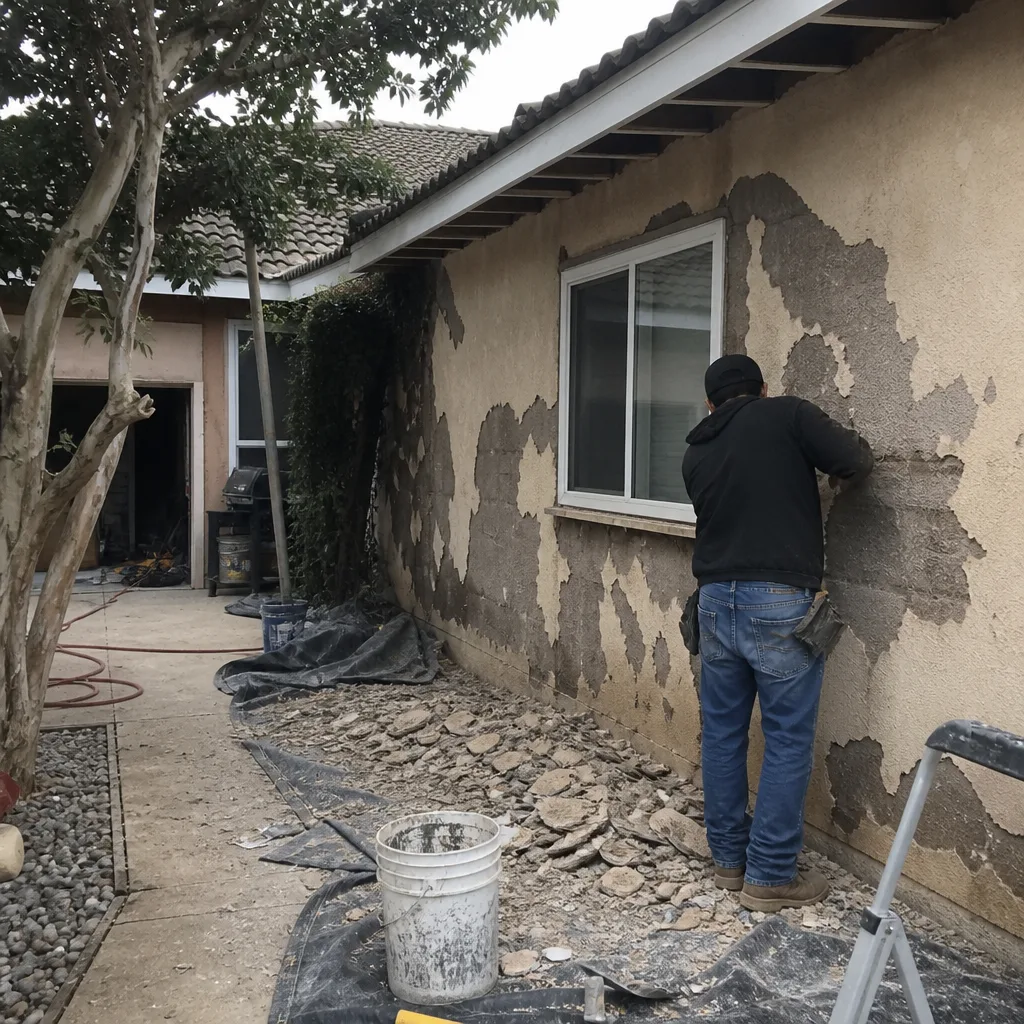 Before
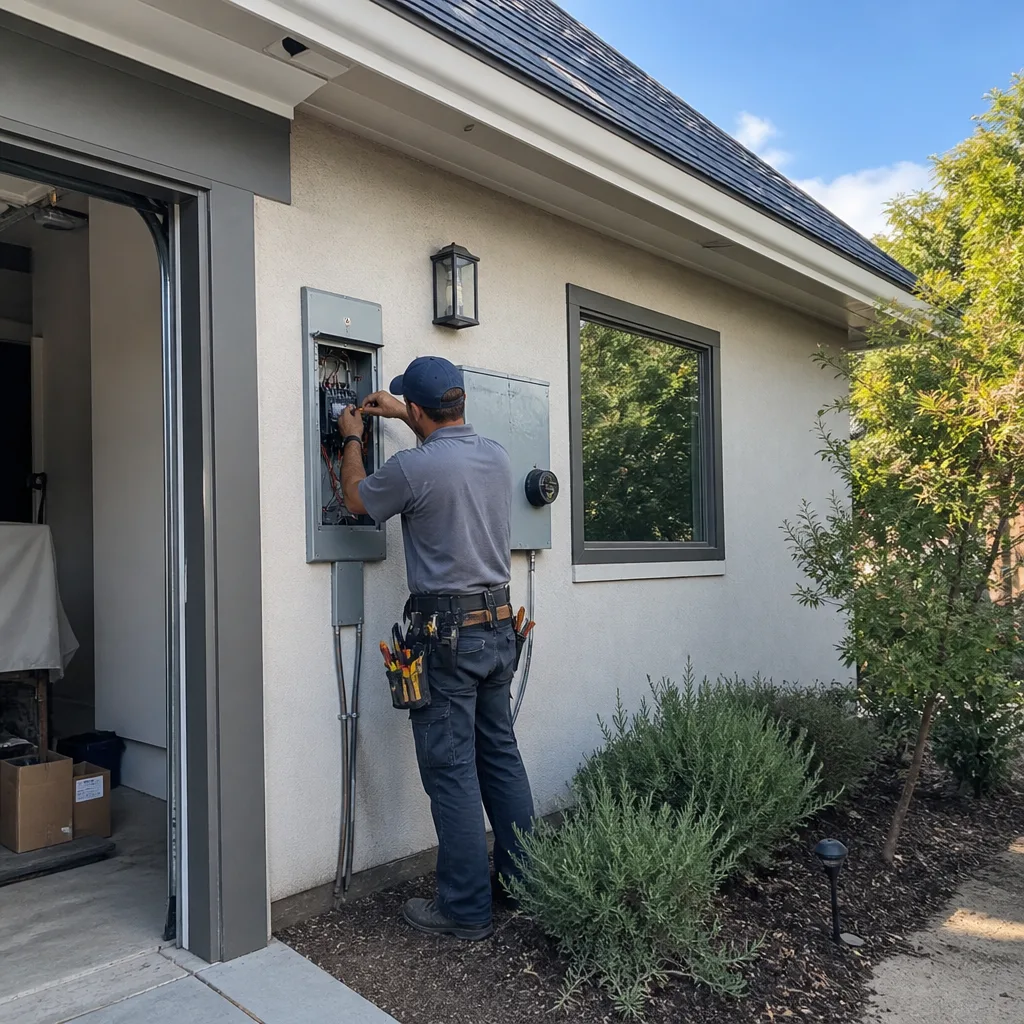 After
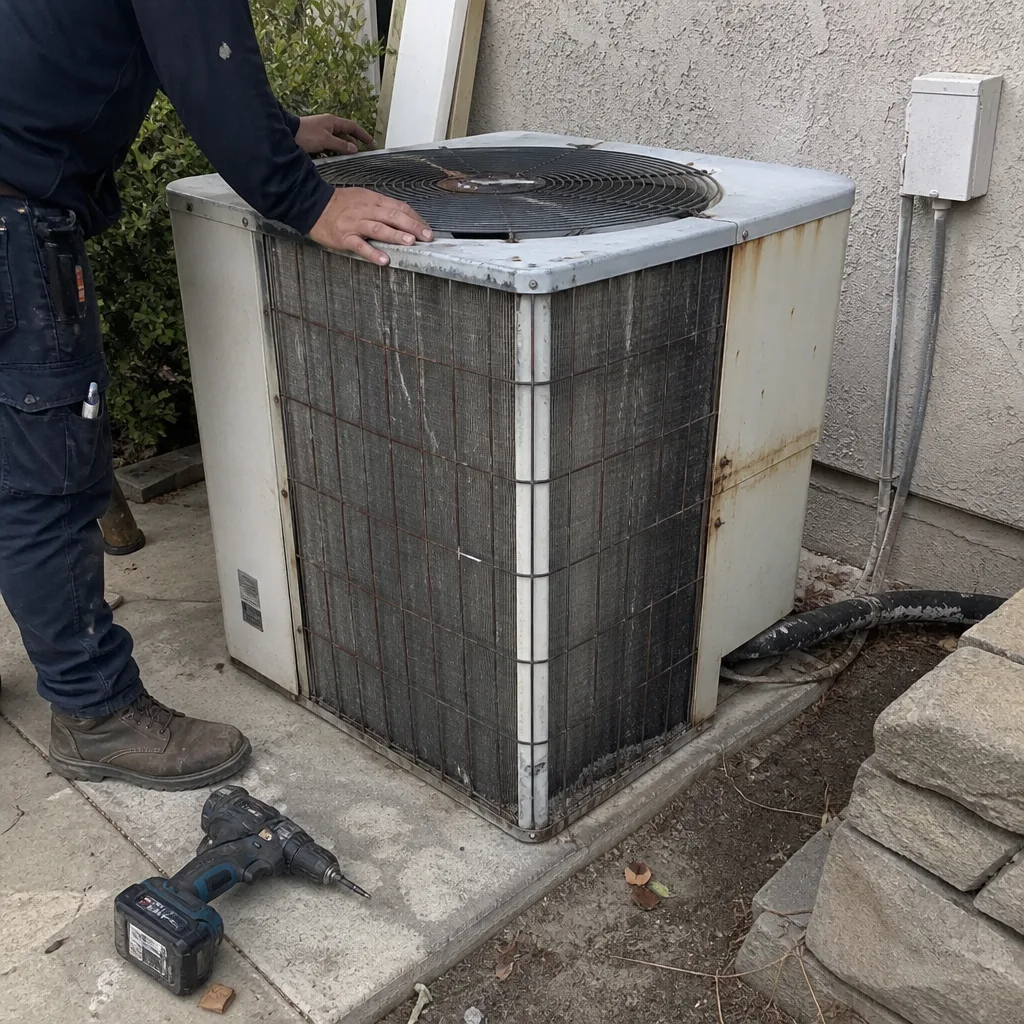 Before
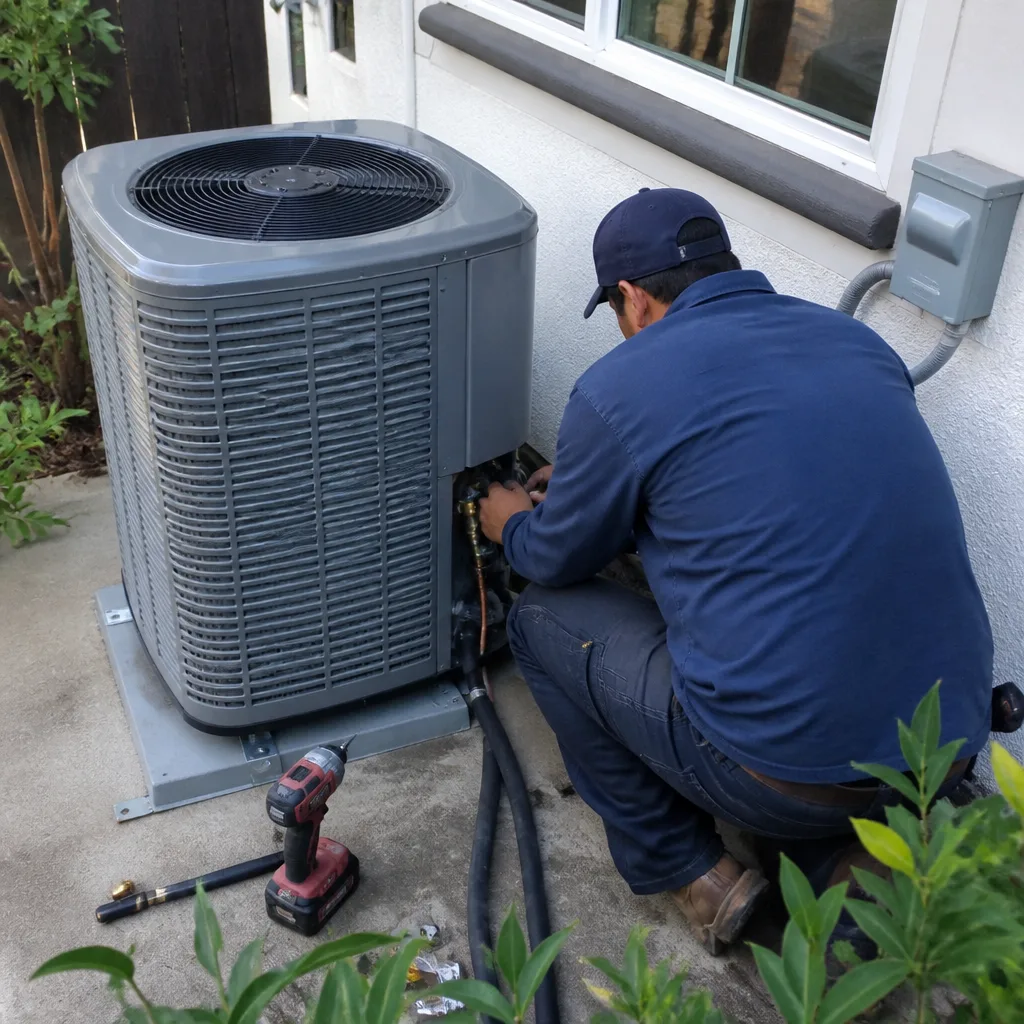 After
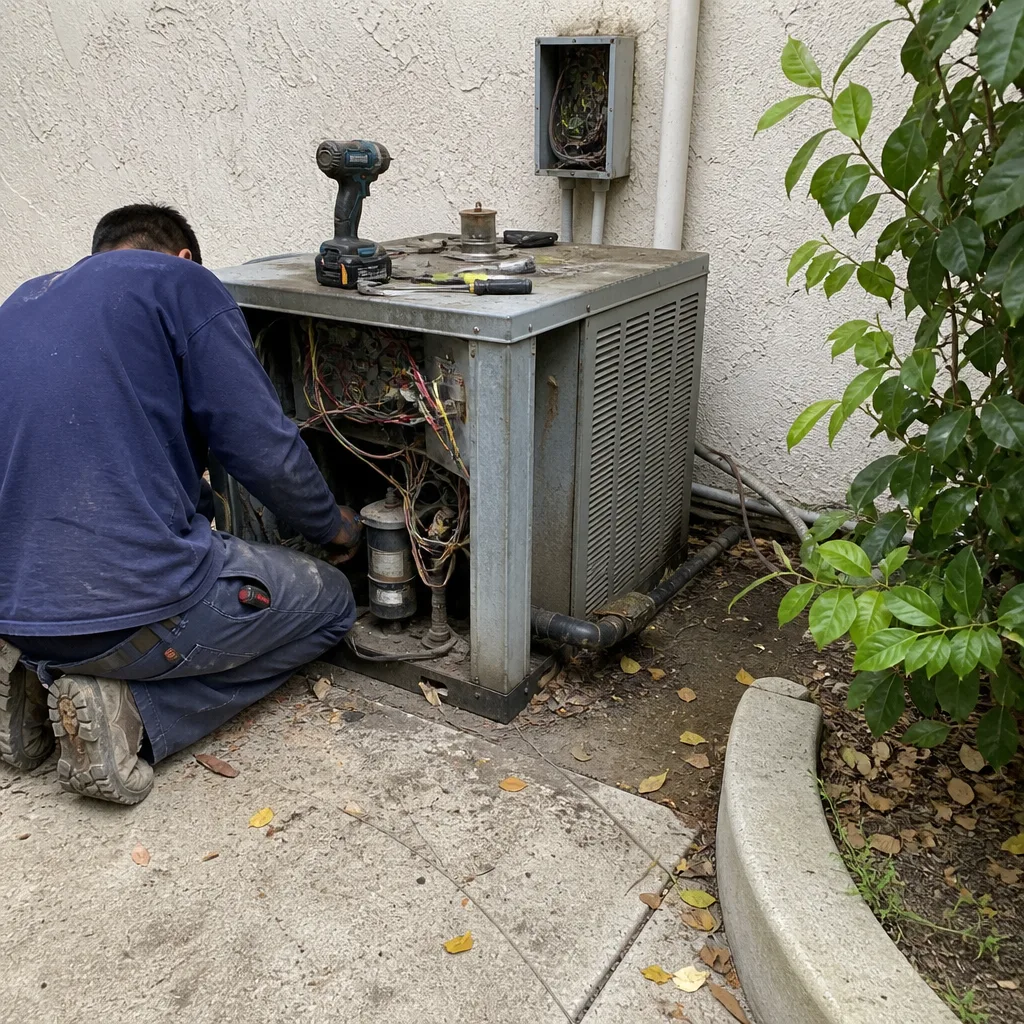 Before
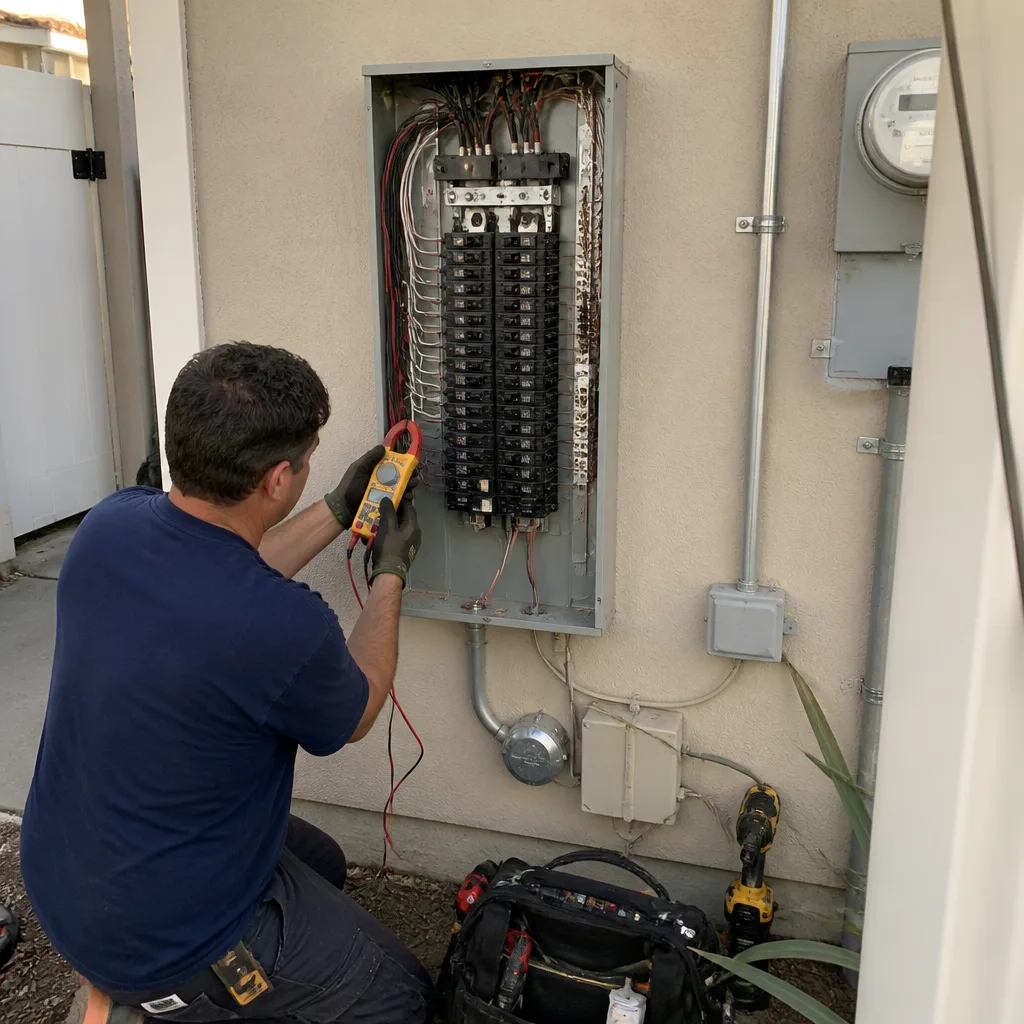 After
When to Call a Professional
You’ll know it’s time to call a professional when the same problem reappears after a repair, when a failure in one system starts causing visible damage in another, or when the work requires more than one trade to complete. Specific triggers for Lake Forest homeowners: a roof leak that has already stained the ceiling, a fence line where three or more posts have moved, a concrete slab that has shifted more than a quarter inch in a single season, or window frames showing rot or mold at the corners. These are not weekend DIY fixes – they’re systemic issues that need a contractor who can see how the pieces connect. Square Deal Contractors offers free estimates in Lake Forest – call (866) 623-7205 to talk through what you’re seeing, and we’ll tell you honestly whether it’s a repair, a replacement, or something you can handle yourself.
Frequently Asked Questions
Inspect your roof at least twice a year – once before wind season in September or October, and once after the winter rains in March or April – plus a quick walk-around after any Santa Ana wind event above 40 mph. Lake Forest’s wind patterns mean roof damage happens in discrete events, not gradually, so the post-wind check matters as much as the seasonal one. If you see lifted shingles or exposed fasteners, call (866) 623-7205 for an estimate before the next wind or rain event turns a minor issue into a leak.
Yes – the low rainfall total is exactly why gutter cleaning matters here. Months of dry weather let dust, leaves, and wind-blown debris accumulate and compact in the gutters. When the winter rains arrive, the entire season’s water volume comes in a few concentrated storms, and the clogged system overflows at the worst possible moment. Count on an October clean, a January check, and a March purge.
Recurring concrete cracks in Lake Forest are almost always a soil movement issue, not a concrete problem. The city’s clay-heavy soil swells when wet and shrinks when dry, and the concrete on top moves with it. If the drainage around the slab isn’t fixed first – downspout discharge, grading, irrigation overspray – any new concrete will crack the same way the old concrete did. For an honest assessment of the soil and drainage conditions before you pour, call (866) 623-7205 and we’ll give you our read on what’s actually causing the movement.
Push each fence post firmly and watch for any movement at the base. A healthy post stays rigid; a post with rot at the soil line or a loose footing will move even a quarter inch under hand pressure. In Lake Forest, where Santa Ana winds routinely exceed 50 mph, a post that moves under hand pressure is already a failure waiting to happen. Address it in September or October, before wind season, when the ground is dry and the work window is open.
For a Lake Forest home built in the 1980s, prioritize window and door seals, roof flashing and pipe boots, and fence post footings. The original window technology has aged past its design life in the California sun, the roof penetrations have been through 40 years of UV and wind cycles, and the fence posts have been exposed to four decades of clay soil expansion. These three categories account for most of the maintenance failures we see on homes from that era.
It’s often cheaper for a single isolated repair, but more expensive when the work spans multiple systems. When a roof leak is causing gutter overflow that’s pooling against the foundation, hiring three separate contractors means three separate service calls, three markup cycles, and no one accountable for how the pieces fit together. A home renovation contractor who manages the full scope can sequence the work, find the root cause, and stand behind the whole repair. The long-run cost comparison favors the general contractor whenever the failure chain crosses trade lines.
The Bottom Line
Lake Forest’s maintenance priorities are shaped by four forces: Santa Ana winds, a compressed 13-inch rainfall season, expansive clay soils, and housing stock that’s now 30 to 50 years old. The homeowners who stay ahead of maintenance in this city are the ones who treat wind as a primary concern, fix drainage before it becomes a foundation problem, and call in a general contractor when failures cross trade lines. A seasonal rhythm – pre-wind preparation in fall, wet-season monitoring in winter, dry-season repairs in summer – keeps cascading costs from eating into the budget you’d rather spend on a new kitchen, a bathroom remodel, or an ADU in the backyard. For more guides & resources, visit our blog. The checklist above is the same one we run when we walk a Lake Forest property, and it’s intended to help you make decisions before the decisions start making themselves.
Written by the team at Square Deal Contractors, serving Lake Forest since 2013.