
Last updated October 30, 2026
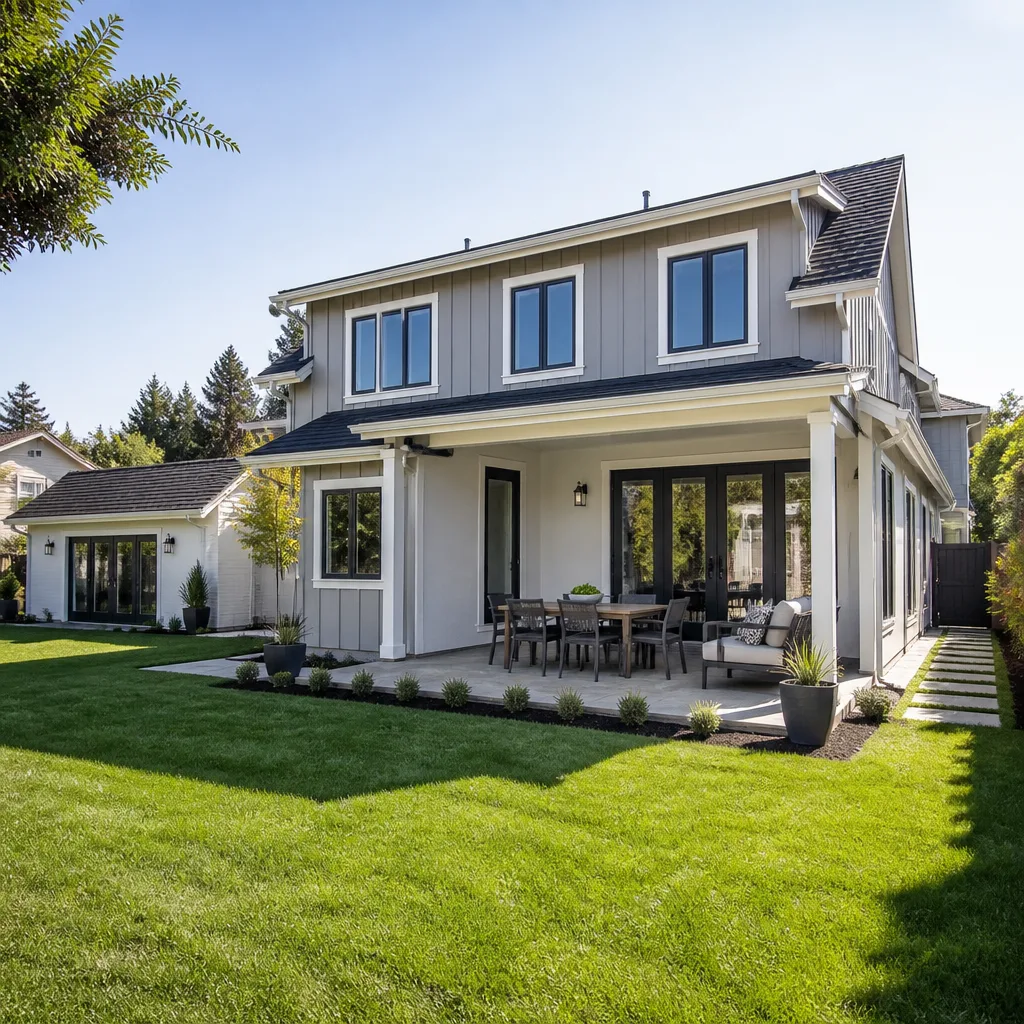 Home additions & ADU
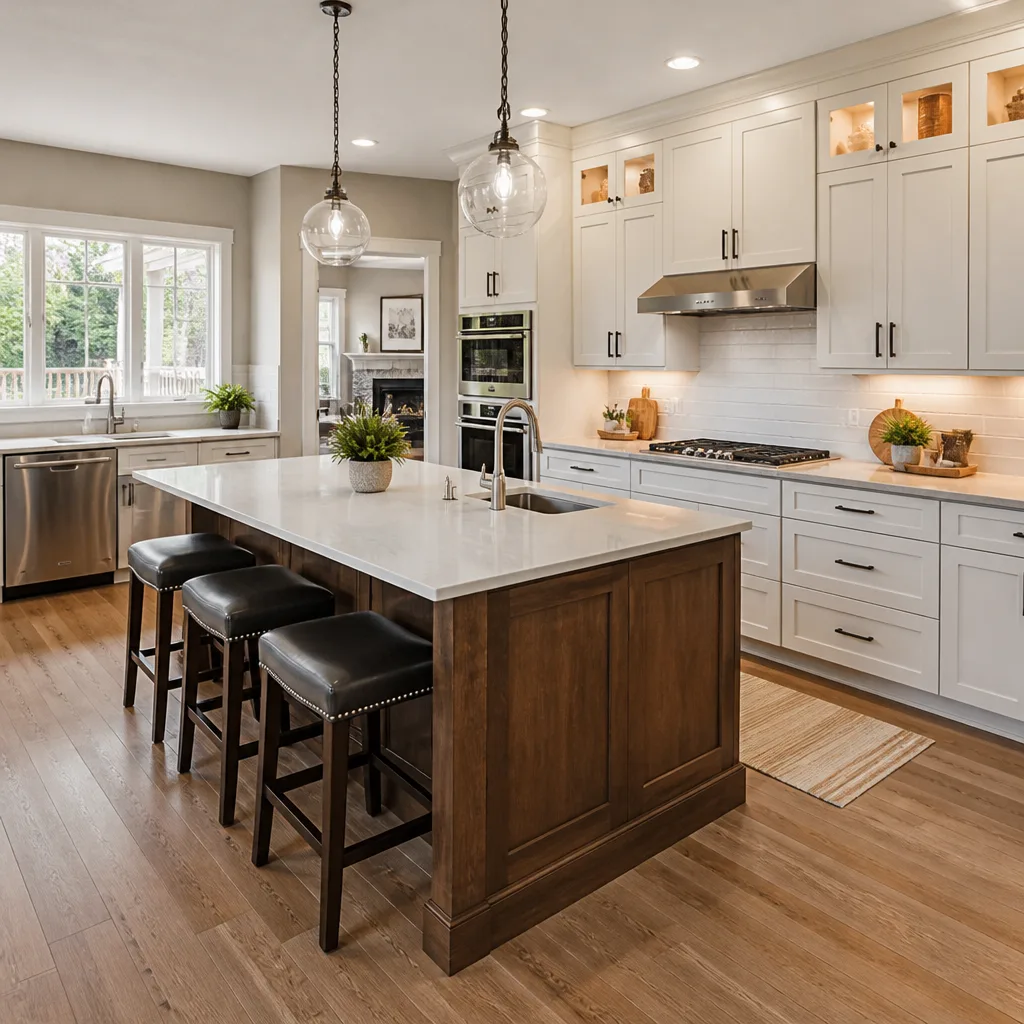 Kitchen remodeling
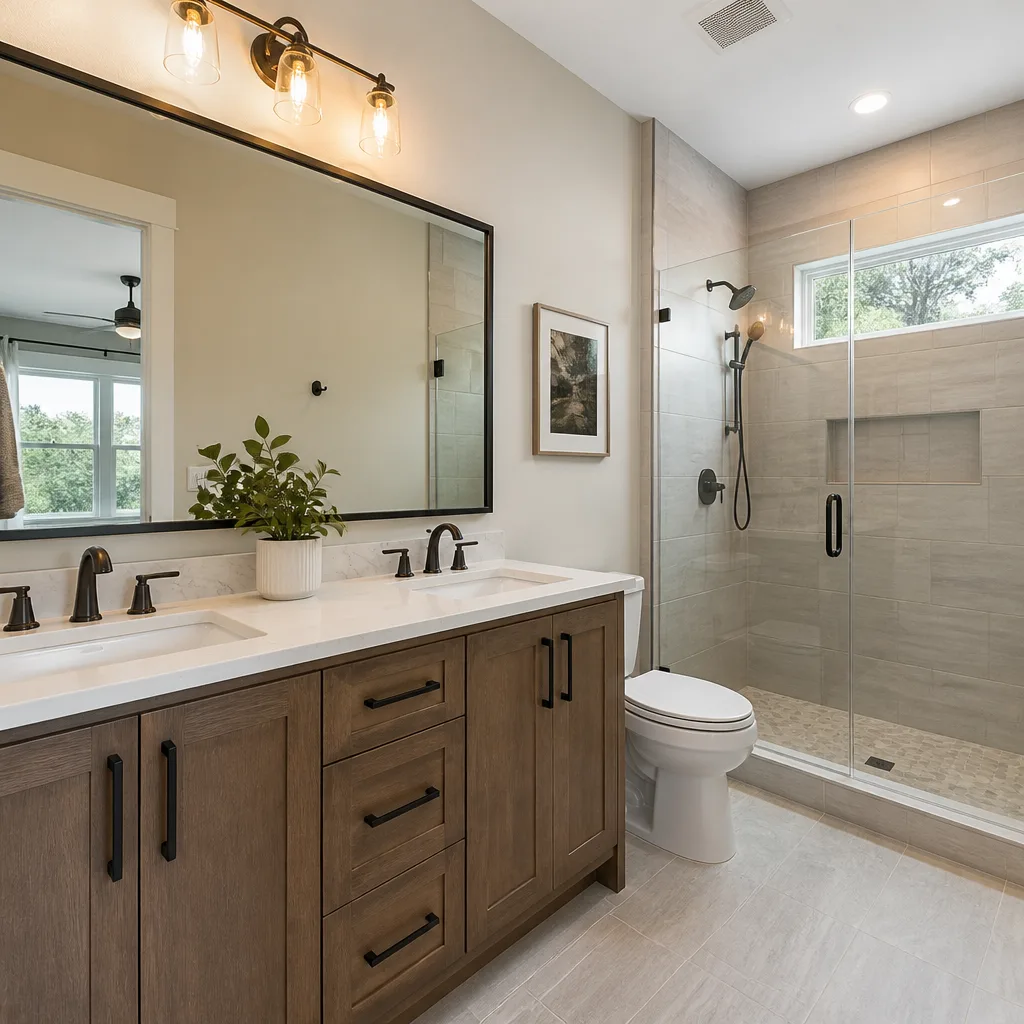 Bathroom remodeling
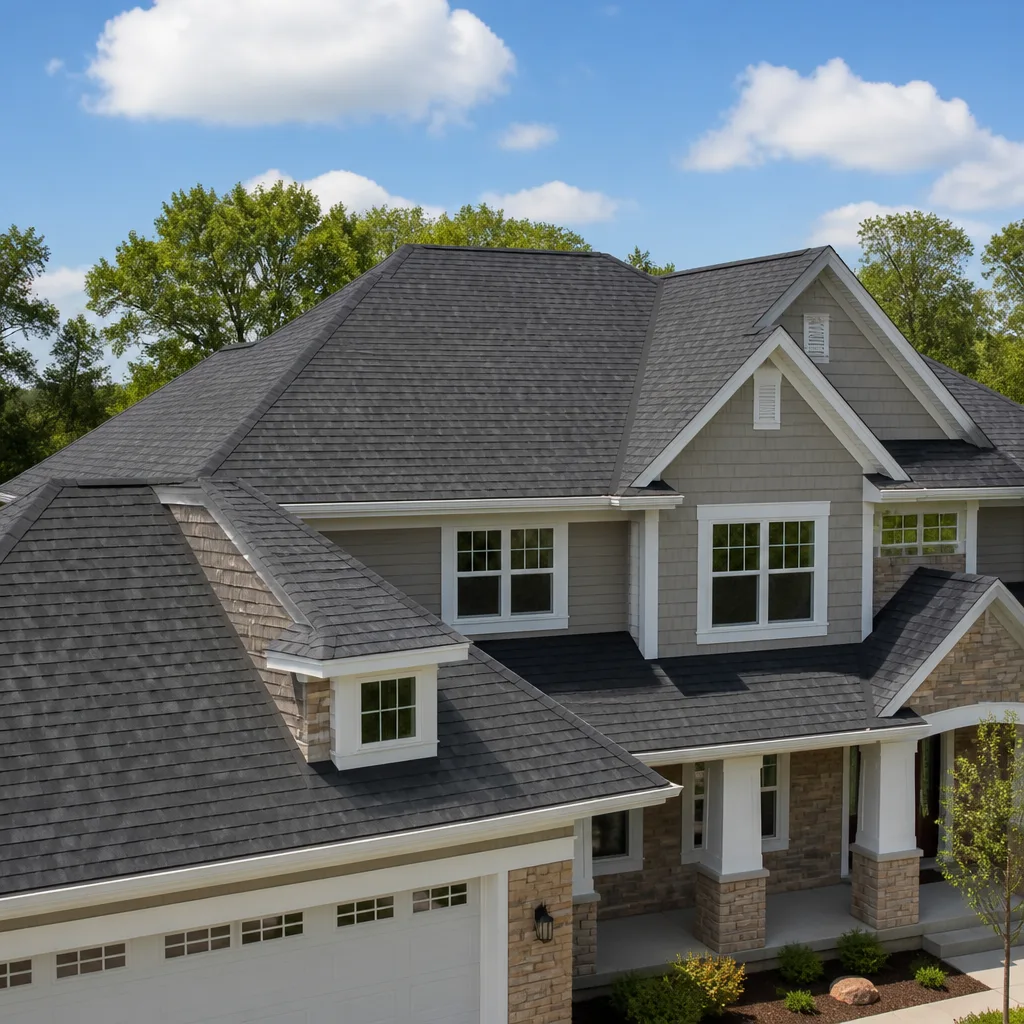 Roofing
 Windows & doors
 Driveway & pavers
 Fence
Free written scope consultation - allowances, timeline, and change-order rules on paper before a single trade is scheduled
Construction Emergency Preparedness Guide for Lake Forest Homes
When a gas line is struck during a neighbor’s unpermitted excavation or a Santa Ana-driven fire ember lands on a wood-framed deck, the question isn’t whether you have water and flashlights. It’s whether your home’s construction can slow the damage long enough to matter. Most Lake Forest homeowners think about emergency preparedness in terms of supplies, but the homes themselves, many built in the 1970s through 1990s and now close to wildfire zones, carry structural vulnerabilities that a flashlight won’t fix. This guide walks through the construction-level preparations that actually change outcomes: hardening against embers, bracing against seismic movement, documenting shutoffs before you need them, and knowing when to call a contractor versus when to evacuate.
Quick Answer
Construction emergency preparedness for Lake Forest homes means hardening the structure against the two most likely threats: wildfire ember intrusion and seismic displacement. That work includes ember-resistant vents, Class A roofing, cripple wall bracing, double-strapped water heaters, and a documented map of every shutoff location. Most of these upgrades cost less than the average insurance deductible after a claim, and several of them (like defensive venting and roof hardening) also qualify for insurance discounts in high-fire-risk ZIP codes. For details on code requirements, see Construction Permits, Codes & Inspections in CA: What You Need to Know.
Styles & brands we work with
Table of Contents
- Lake Forest’s Real Risk Profile
- Ember Hardening: Where Fire Actually Enters a Home
- Seismic Preparation: Cripple Walls, Water Heaters, and Soft Stories
- Mapping Your Shutoffs Before You Need Them
- Post-Event Inspection: What to Assess and When to Call
- Wind and Santa Ana Preparation
- Vetting an Emergency Contractor Under Pressure
- Aging Infrastructure in 1970s – 1990s Tract Homes
Lake Forest’s Real Risk Profile
Lake Forest sits in a specific band of Orange County where three risk factors overlap. First, the city’s eastern edge borders the Cleveland National Forest corridor, which places many neighborhoods inside or adjacent to the Very High Fire Hazard Severity Zone (VHFHSZ) as mapped by Cal Fire. Second, the city sits along the Elsinore and San Joaquin Hills fault systems, both capable of producing moderate to significant ground shaking. Third, the Santa Ana wind season from September through January regularly produces sustained winds above 40 mph with gusts exceeding 60 mph through the canyons.
What most homeowners miss is that these three risks create a compounding failure pattern. A Santa Ana wind event doesn’t just stress your roof and fencing; it also carries embers from distant fires at speeds that defeat standard construction assemblies. An earthquake doesn’t just rattle the walls; it can shear the connections between your water heater and gas line, creating a fire hazard inside the home while the fire department is already overwhelmed with calls. The preparation that matters most is the preparation that interrupts these compounding failures.
We’ve walked through enough Lake Forest homes after wind events and minor seismic activity to recognize the pattern: the damage is rarely catastrophic from the first event. It’s the secondary damage, a small gas leak after a water heater shift, an ember that fell into an unvented attic cavity, that turns a stressful day into a destructive one.
Ember Hardening: Where Fire Actually Enters a Home
Wildfire imagery tends to focus on walls of flame, but the research from the Insurance Institute for Business and Home Safety tells a different story. The majority of homes that ignite in wildfire conditions do so from embers, not direct flame contact. Embers are small enough to enter through exhaust vents, attic intake vents, crawl space openings, and the gaps where roof sheathing meets fascia boards. Once inside, they smolder in accumulated debris and ignite from the inside out.
In Lake Forest, this is particularly relevant because of the tract home construction patterns from the 1970s through 1990s. Many of these homes have continuous ridge and soffit vents with mesh screens that are far too large to stop embers. A standard 1/4-inch mesh screen allows embers the size of a thumbnail to pass through. The upgrade that matters is 1/16-inch or smaller mesh, which is now required in California’s Wildland Urban Interface (WUI) building code for homes in the VHFHSZ.
Here’s the ember-hardening sequence that delivers the most protection for the cost:
- Replace or retrofit all exterior vents with ember-resistant models rated to ASTM E2886 standards. This includes attic vents, crawl space vents, gable vents, and any through-wall exhaust vents.
- Evaluate and upgrade roofing to a Class A rated assembly. This doesn’t necessarily mean replacing your entire roof; it means confirming that your current roof meets Class A standards and, if not, planning the upgrade with materials from GAF or Owens Corning, both of which manufacture WUI-compliant systems.
- Clear accumulated debris from the areas where roof planes meet vertical walls. Embers settle into these intersections and ignite accumulated pine needles and leaf litter.
- Address the gap between roof decking and fascia with a metal drip edge or ember-resistant filler. This is one of the most overlooked entry points in aging tract homes.
- Replace degraded weather stripping around garage doors. Garages are the most common room of origin for ember-ignited fires because they’re typically less protected from wind-driven embers.
The cost conversation matters here. A full Class A roof replacement in Lake Forest typically runs $12,000 to $25,000 depending on square footage and material selection. But ember-resistant vent retrofits are a fraction of that, often $800 to $2,500, and they address the most common point of ignition directly. If you’re on a budget, start with the vents and the garage seals. Those two items alone reduce ember-related ignition risk significantly.
Seismic Preparation: Cripple Walls, Water Heaters, and Soft Stories
Construction-grade seismic preparation for Lake Forest homes is not the same as earthquake supply preparation. The supplies matter, but the structural work determines whether your home remains habitable after a moderate event. The three most important structural upgrades are cripple wall bracing, water heater strapping, and soft-story evaluation.
Cripple walls are the short wood-framed walls between the foundation and the first floor, typically found in homes with raised foundations. Many homes built in Lake Forest in the 1970s and 1980s have cripple walls with minimal or no plywood sheathing. During shaking, these walls can rack and collapse, causing the floor system above to drop, which is a major cause of structural failure in otherwise well-built homes. The retrofit involves installing plywood panels and anchor bolts to connect the cripple wall to the foundation. The state of California’s Earthquake Brace and Bolt program has subsidized this retrofit in certain ZIP codes, and the work typically runs $4,000 to $8,000 when done by a licensed contractor.
Water heater strapping is simpler and cheaper, and it’s now required by code in California. The standard is two straps, one in the upper third and one in the lower third of the tank, each rated to resist lateral movement. If your water heater has only one strap, or if the straps are loose enough to slide, the tank can topple during shaking. A toppled gas water heater risks a gas line rupture, which is how earthquakes become fires.
Soft-story conditions matter specifically in the attached homes and older condominium communities in Lake Forest. A soft story is a floor level that is significantly less stiff than the floors above, typically because it has large garage openings with minimal shear wall area. If you live in a condominium or townhome with parking at ground level and living space above, the soft-story retrofit question is one worth asking your HOA about before the event, not after.
Our recommendation for most Lake Forest homeowners is to have a licensed contractor or structural engineer evaluate the cripple wall condition and water heater strapping as a combined inspection. It’s a low-cost evaluation that gives you a clear answer about what needs to happen and in what order.
Mapping Your Shutoffs Before You Need Them
The moment after a gas leak or a burst pipe is not the moment to learn where your shutoffs are. We know this from experience: we’ve arrived at homes after wind events and minor quakes where the homeowner spent ten minutes searching for the gas shutoff while a small leak continued inside. The preparation that prevents this is simple but requires doing it now.
Here’s the step-by-step documentation process:
- Locate your gas shutoff valve. In most Lake Forest homes, the gas meter is on the front or side exterior of the house. The shutoff valve is located on the pipe running from the ground to the meter. It requires a quarter turn with a wrench to close.
- Locate your main water shutoff. This is usually on the front exterior of the home, often near the hose bib or on the wall facing the street. In some tract homes, it’s inside the garage.
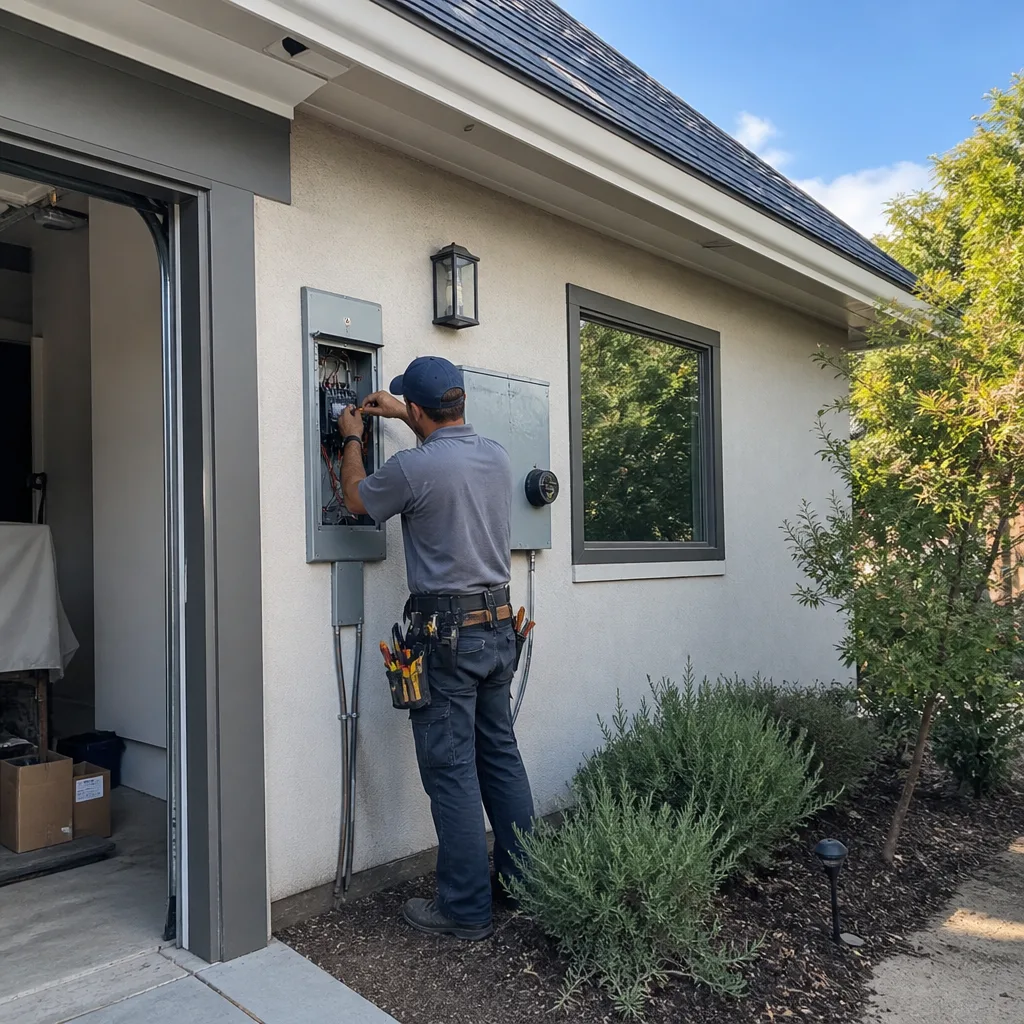
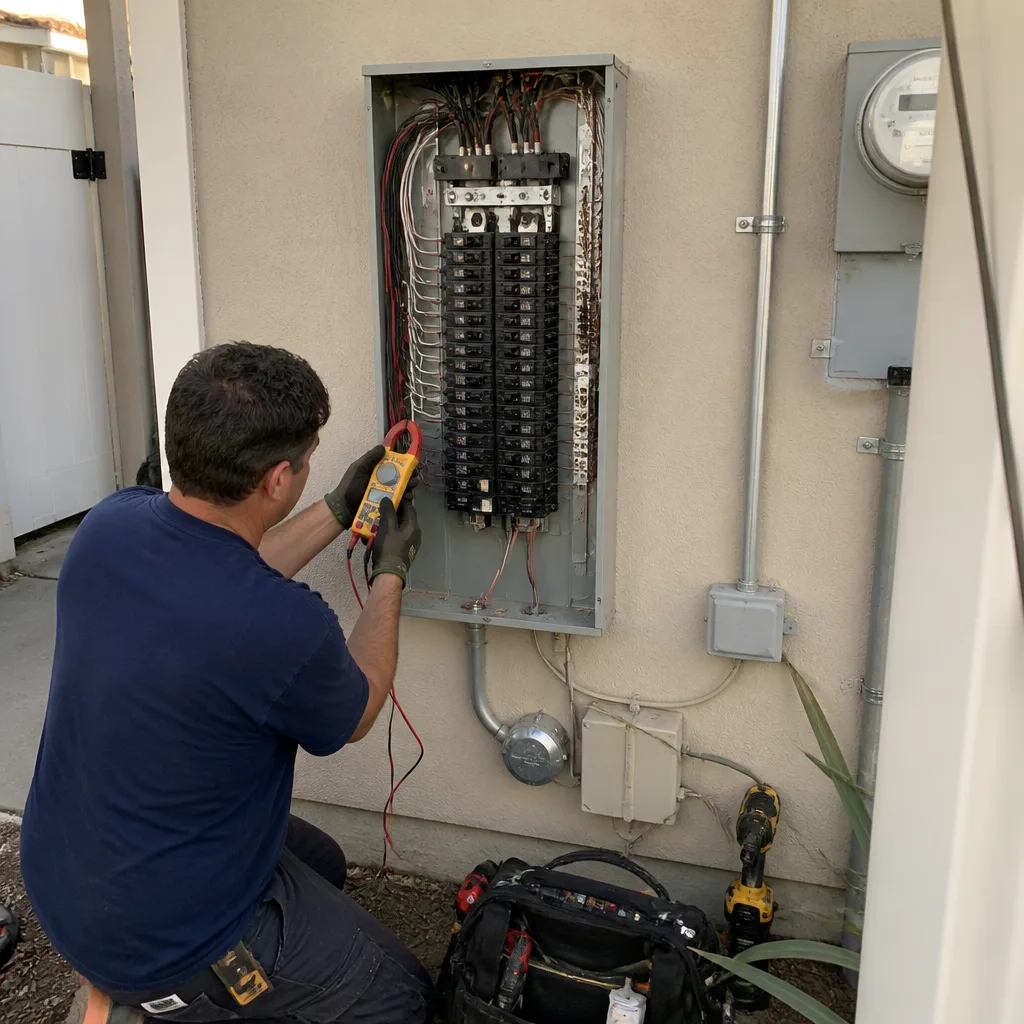
- Locate your electrical panel. Note whether the main breaker is a single large switch at the top of the panel. If it is, you can shut off all power with one motion.
- Take a photo of each location with your phone and save them to a shared album or a folder you can access even if you’re not at home.
- Print a simple floor plan or site sketch and mark the shutoff locations on it. Post this on the inside of a kitchen cabinet door.
- Write down the location in a note stored in your phone so the information travels with you.
There’s a reason contractors ask for this documentation when they arrive after an emergency. Before we touch anything, we need to confirm that gas, water, and power are in the states we expect. A homeowner who can point to a labeled photo saves everyone time, and it reduces the risk of an incorrect shutoff or restart sequence causing additional damage.
Gas line safety is not a DIY matter. If you smell gas or hear a hissing sound after an event, close the gas shutoff at the meter if you can do so safely, and evacuate. Do not flip any switches, do not use your phone inside, do not attempt to relight pilots. Call the utility company and wait for a professional to clear the home. This is one area where the stakes are too high to guess.
Post-Event Inspection: What to Assess and When to Call
After a wind event or minor seismic activity in Lake Forest, the instinct is to walk the property and check for visible damage. That’s the right instinct, but the assessment should follow a specific sequence that starts with safety and ends with a decision about whether to call a contractor or a structural engineer. Our Construction Warning Signs: A Lake Forest Homeowner’s Reference Guide covers what to watch for.
Here’s the sequence we recommend:
- Check for gas odor first. Walk the perimeter of the home before entering. If you smell gas outside or at the door, stop and call the utility.
- Look for visible structural movement. Cracks that were not there before, particularly diagonal cracks at door and window corners, or cracks wider than 1/8 inch, indicate movement that should be evaluated by a professional.
- Check the roof from the ground. Missing shingles, lifted ridge caps, or displaced tiles are visible from the street with binoculars. Don’t climb the roof after an event; the structure may be compromised.
- Look at the attic from the hatch. If you can safely access the attic, shine a light along the ridge line and around vent penetrations. Water staining after wind-driven rain is common and worth documenting before it spreads.
- Test doors and windows. If doors that previously closed cleanly now stick, or if windows bind, the frame may have shifted. This is not cosmetic; it’s a signal that the structure moved.
When to call a contractor versus when to call a structural engineer: if the issue is a displaced window, a water-stained ceiling, or missing shingles, a licensed general contractor is the right call. If the issue is a foundation crack wider than 1/4 inch, a visibly racked wall, or a floor that now slopes, call a structural engineer first. The engineer’s report then guides the contractor’s repair scope.
For homes in Lake Forest with raised foundations, we recommend a foundation inspection after any event strong enough to rattle dishes. The cost is low relative to ignoring movement that develops into a structural repair down the line.
Wind and Santa Ana Preparation
The Santa Ana winds are the least discussed structural threat in Lake Forest, but they’re the most frequent. Every year between September and January, sustained winds stress roofs, fences, and unprotected south-facing exposures. The preparation is not glamorous, but it’s effective.
Roof edge fastening is the first line. On many aging tract homes, the drip edge and rake edge fasteners have loosened over time. During Santa Ana events, wind gets under the roof edge and begins peeling the roof from the corners inward. A roofer can re-fasten edges and replace missing fasteners for a few hundred dollars in most cases. Compare that to the cost of a full re-roof after wind-driven failure, and the math is clear.
Fencing is the second line, particularly for homes along the slopes and canyons where wind funnels. Wood fencing is effectively a sail, and a single failed post often takes down an entire run. If you have wood fencing on a windward exposure, check the post bases annually. Posts set in concrete need to be checked for rot at the ground line, which is where most failures start. Downed fencing during a wind event is not just a property loss; it becomes airborne debris that causes more damage.
Outdoor structures, particularly aluminum patio covers and pergolas, are also wind-sensitive. The attachment at the house connection is the weak point. If the structure was bolted through stucco without backing or into roof framing without flashing, it can lift and tear at the connection. Any outdoor structure attached to the home should be evaluated for the quality of the house-side connection before wind season.
One final note specific to Lake Forest: the older neighborhoods with mature eucalyptus and pine trees should have those trees evaluated by an arborist before wind season. Eucalyptus is brittle and heavy, and a large limb falling on a roof during a Santa Ana event is a common source of wind-related structural claims in this area.
Vetting an Emergency Contractor Under Pressure
After a significant event, contractors appear quickly. Some are legitimate. Some are opportunists. The pressure to act fast is real, especially when there’s active water intrusion or a tarped roof. But the license and insurance verification steps still apply, and they take less time than you think.
The California Contractors State License Board (CSLB) maintains a license lookup tool at cslb.ca.gov. Any contractor working on a project valued over $500 must hold a valid license. Search by company name or license number, and confirm that the license classification matches the work being done. A general building contractor holds a “B” classification, which allows them to manage multiple trades under one contract. A specialty contractor holds a specific classification: C-39 for roofing, C-36 for plumbing, C-10 for electrical. If someone claims to be a general contractor but the license shows a specialty classification, that’s a red flag.
Insurance verification is the second step. The contractor should carry general liability insurance and workers’ compensation insurance. Workers’ comp is not optional for a company with employees; if a worker is injured on your property and the contractor lacks workers’ comp, the liability can fall on you as the homeowner. Ask for a certificate of insurance and call the insurer to confirm the policy is active.
Then there’s the written estimate question. When damage is active, some contractors will ask you to sign an authorization before they provide a written scope. Do not sign anything that doesn’t include a defined scope of work and a price. A legitimate contractor can evaluate visible damage, write a scope, and provide a price quickly. If they tell you the price can’t be known until they start, that’s not a reason to sign a blank authorization; it’s a reason to get another opinion.
Square Deal Contractors operates with exactly this discipline: written estimates, defined scopes, and no change orders without prior approval. That’s the same standard you should hold any contractor to, whether you’re hiring us or someone else. We’ll tell you exactly what we’re going to do and what it will cost before we start. The Square Deal name is a standing commitment, not a marketing phrase bolted on after the fact.
Aging Infrastructure in 1970s – 1990s Tract Homes
Lake Forest’s housing stock is predominantly tract construction from the 1970s through 1990s, and that age range carries specific infrastructure concerns that intersect with emergency preparedness. The materials and methods from this era were not bad, but they’ve now been in service for 30 to 50 years, and some components are reaching the end of their design life.
Water supply lines are the leading concern. Homes from this era were sometimes built with polybutylene supply piping, which is prone to sudden failure at fittings. If you have gray plastic supply lines, typically visible under sinks and behind toilets, plan for full repiping before it fails on its own schedule. A burst supply line while you’re away from home is a construction emergency that creates extensive water damage before anyone notices.
Electrical panels are the second concern. Certain panel brands from this era, including Federal Pacific and Zinsco, have documented failure rates that leave circuits energized even when breakers trip. If your panel is one of these, upgrading it is a fire-prevention measure, not just a code compliance item.
Deck and balcony connections are the third concern. Homes from this period often have cantilevered decks where the connection to the house framing relies on ledgers that may show rust on fasteners or rot at the connection points. These are areas where fires, wind, and moisture all converge, and they’re worth an inspection as part of your preparedness plan.
None of these infrastructure issues are emergency situations today, but each one becomes an emergency if it fails during a wind event, an earthquake, or a wildfire evacuation window. Addressing them before they fail is the definition of construction preparedness.
Common Mistakes to Avoid
- Focusing only on supplies and ignoring structure. A well-stocked emergency kit in a home with unbraced cripple walls and 1/4-inch mesh vents is not preparedness. It’s supplies in a vulnerable building.
- Assuming wildfire hardening means replacing the roof. Ember-resistant vents and garage seals are the highest-leverage upgrades for most Lake Forest homes, and they cost a fraction of a roof replacement.
- Installing a water heater with a single strap. California code requires two straps, and a single strap allows enough lateral movement to cause a gas line failure during shaking.
- Signing an emergency repair authorization before a scope and price exist. The urgency of active damage is not a reason to waive the written estimate requirement.
- Ignoring the soft-story condition in attached housing. If your home has parking at ground level and living space above, the soft-story retrofit question belongs on the HOA agenda before the event.
- Postponing the shutoff documentation because it’s inconvenient. The ten minutes you spend labeling your shutoffs today will save real time and damage when an emergency is underway.
- Climbing the roof to inspect after a wind event. The roof structure may be compromised, and the inspection from the ground with binoculars is sufficient to identify post-event needs that require a professional look.
See the difference
 Before
 After
 Before
 After
 Before
 After
When to Call a Professional
If you discover diagonal wall cracks wider than 1/8 inch, a shifted water heater with possible gas line stress, a roof with missing shingles or lifted ridge caps, or water staining in the attic after wind-driven rain, call a professional before re-occupying or making a repair decision. These are the situations where a licensed contractor can assess the scope, document the damage for insurance, and recommend whether a structural engineer is needed. If you’re uncertain whether a condition is cosmetic or structural, an inspection is cheaper than a missed diagnosis. Square Deal Contractors offers free estimates in Lake Forest – call (866) 623-7205 to schedule one when you’re ready to address a construction vulnerability before it becomes an emergency.
Frequently Asked Questions
Construction emergency preparedness means hardening your home’s structure against the specific risks it faces – typically wildfire embers, seismic movement, and wind damage – and documenting your shutoffs and inspection points so you can act quickly after an event. It’s distinct from supply preparation because it addresses the building itself. For more guides & resources on protecting Lake Forest homes, visit our blog.
Cripple wall bracing in Lake Forest typically runs $4,000 to $8,000 depending on the foundation perimeter and the number of walls requiring sheathing. Water heater double-strapping is significantly less, usually $200 to $400 including materials and labor. These are project-specific figures that require a formal estimate for an exact quote.
If your home is in or adjacent to the Very High Fire Hazard Severity Zone mapped by Cal Fire, ember-resistant vents with 1/16-inch or smaller mesh are required for new construction and significant remodels under California’s Wildland Urban Interface building code. For existing homes that predate the code, the upgrade is voluntary but strongly recommended.
Cripple wall bracing and water heater strapping typically require building permits in Lake Forest, and the permit ensures the work is inspected against current code. Ember-resistant vent replacement may be classified as a like-for-like repair in some cases, which can waive the permit requirement. The Home Renovation in Placentia page covers similar renovation permit questions for nearby projects. Any contractor you hire should handle permitting as part of the scope.
Document three things: the location and operation of your gas, water, and electrical shutoffs; photos of your home’s exterior from all four sides (for insurance documentation); and a list of any known vulnerabilities, such as unbraced cripple walls or aging supply piping. This documentation speeds both your response and any contractor’s response after an event.
Some ember-hardening upgrades, including Class A roofing and ember-resistant vents, may qualify for insurance premium discounts in high-fire-risk areas, but the upgrades themselves are typically not covered as insurance claims. They’re classified as preventive improvements. Seismic retrofit work may qualify for state subsidies through the Earthquake Brace and Bolt program. Check with your policy provider for specifics.
We follow the same protocol for every project, emergency or otherwise: evaluate the visible scope, write a defined scope of work, provide a written estimate, and hold that price unless you approve a change order in writing. For broader project work, our capabilities as a General Contractor in Placentia and the surrounding area include full Home Remodeling in Placentia projects, all managed under one contract. The full-scope general contracting model means a single accountable partner across every phase, from roofline to backyard.
The Bottom Line
Lake Forest homes face a specific set of construction vulnerabilities: ember entry through undersized vent mesh, structural movement during seismic activity, wind-driven roof and fencing failure during Santa Ana events, and aging infrastructure in 1970s through 1990s tract construction. The preparation that matters is structural, not just supply-based. Document your shutoffs, evaluate your cripple walls and water heater strapping, install ember-resistant vents, and create an inspection sequence for after events. The work costs less than the damage it prevents. If you’re ready to address a vulnerability or you want a professional evaluation of your home’s current state, call Square Deal Contractors home at (866) 623-7205 for a free estimate. We’ll tell you exactly what we’re seeing and what it costs to fix, whether you hire us or not.
Written by the team at Square Deal Contractors, serving Lake Forest since 2013.